
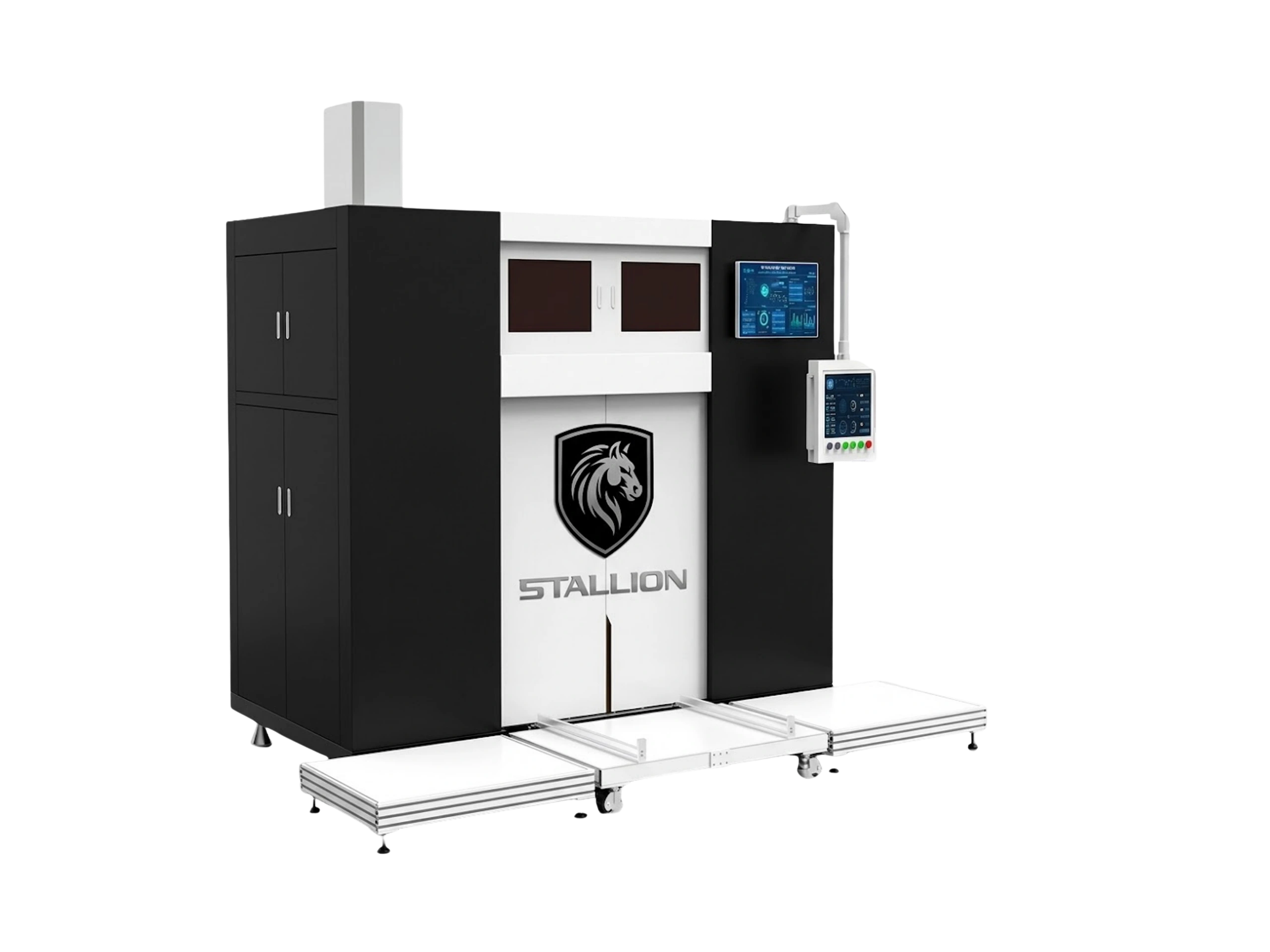
At A Glance
Operations Performed
Full Specifications
FX4 Cold-Box Core Shooter (Small-to-Medium Cores)
| Specification | FVX2000 |
|---|---|
| Maximum sand-mould dimensions L × W × H (mm) | 2000 × 1000 × 1000 |
| Print accuracy | ≤ ±0.3 mm across the entire print range |
| Print speed (per layer) | 24–36 seconds (adjustable) |
| Daily production capacity (resin sand) | ≥ 2.5 tons |
| Print resolution | 200 dpi |
| Print layer thickness | 0.2 mm – 0.5 mm (adjustable) |
| Sand-type gas generation | ≤ 10 ml/g |
| Sand permeability | ≥ 190 |
| Sand-model tensile strength | ≥ 1.5 – 2.5 MPa (adjustable) |
| Sand-type burn loss | 1.4 – 1.6% |
| Liquid dosage accuracy error | ±1% |
| Sandpit bottom-plate height | Sandpit bottom-plate height |
| XYZ guide-rail positioning accuracy | ±0.01 mm |
Standard Features Optional Equipment
Standard Features
- Programmable controller from a leading international brand
- 24-hour continuous operation without material replenishment
- Fully automatic feeding system + chemical liquid supply
- Pressure gauge with oil-water separator
- Dry sand recovery device
- Built-in cleaning brush
- Automatic locking + emergency stop button
- Dust-proof protection on rails and moving mechanisms
- Lubricant-filling interfaces on guides and lead screws
- Protective enclosure with warning signs
Optional Equipment
- UPS power supply for outage protection
- Extended sand-pit liners for shorter changeover
- Inline post-print cleaning station
- Furan binder bulk-supply integration (drum / IBC)
- Print-server workstation with CAD-to-print preparation suite
- Print-server workstation with CAD-to-print preparation suite
- Remote diagnostics + over-the-air firmware updates
- Operator training package (5-day on-site)
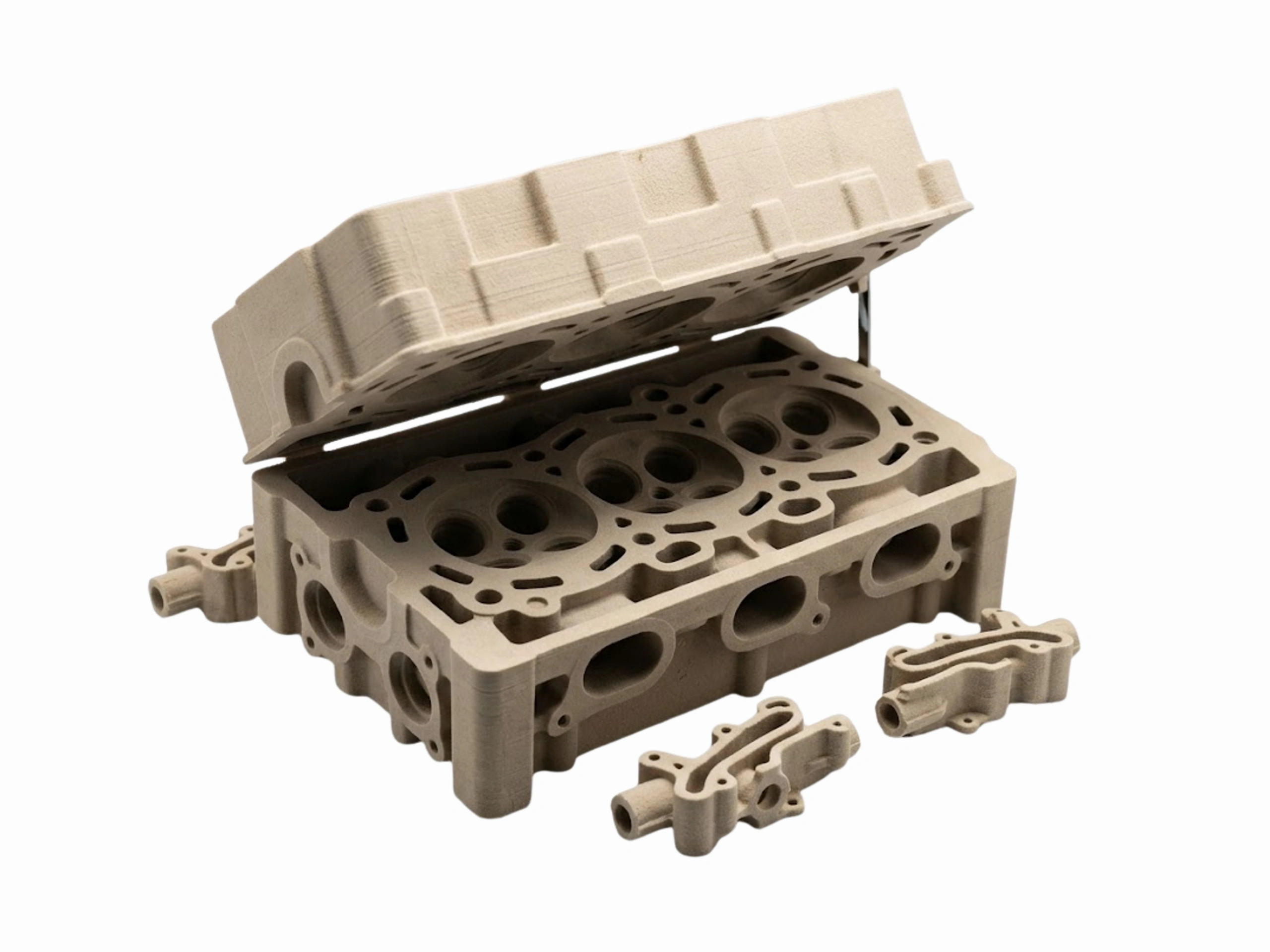
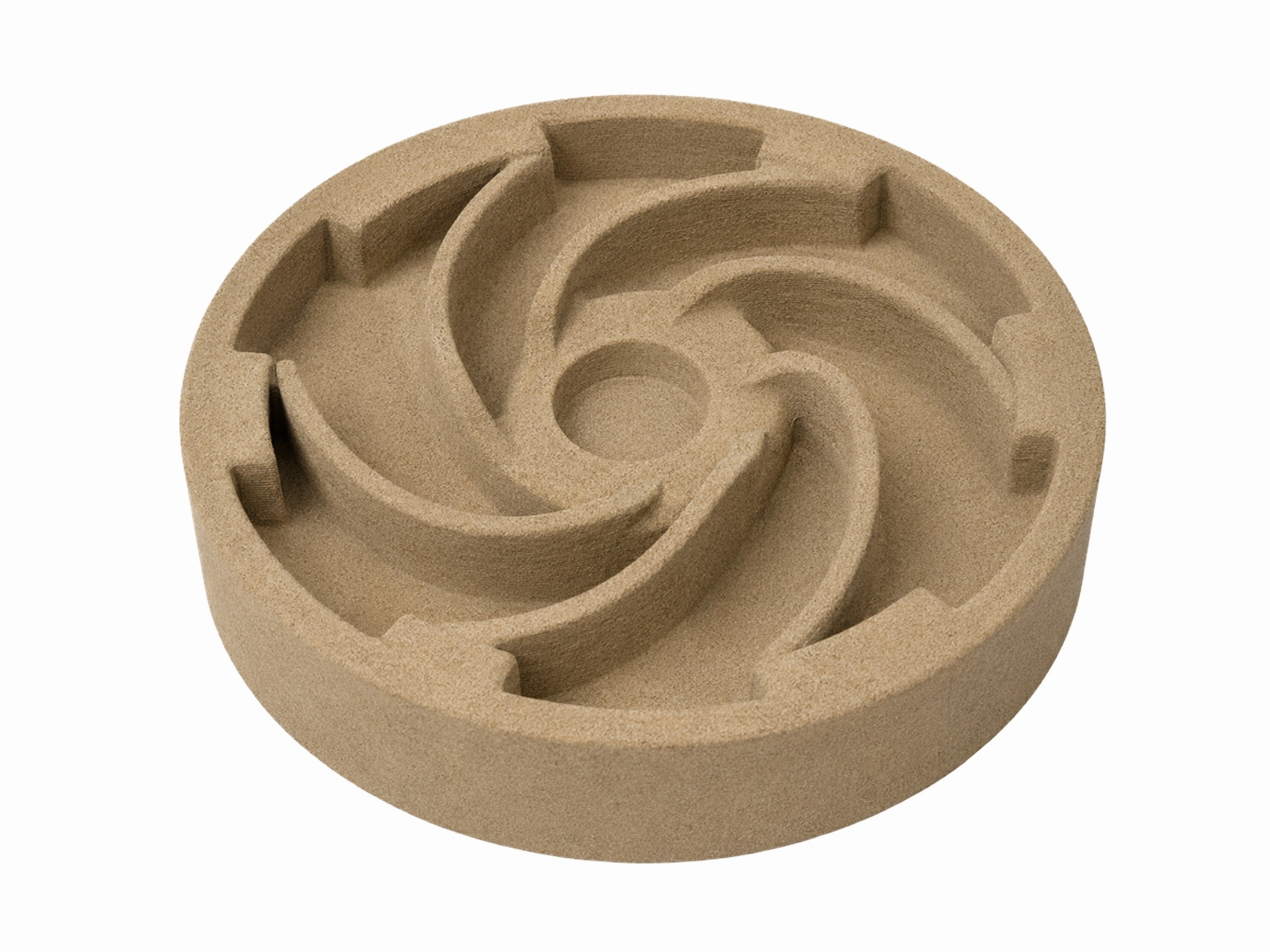
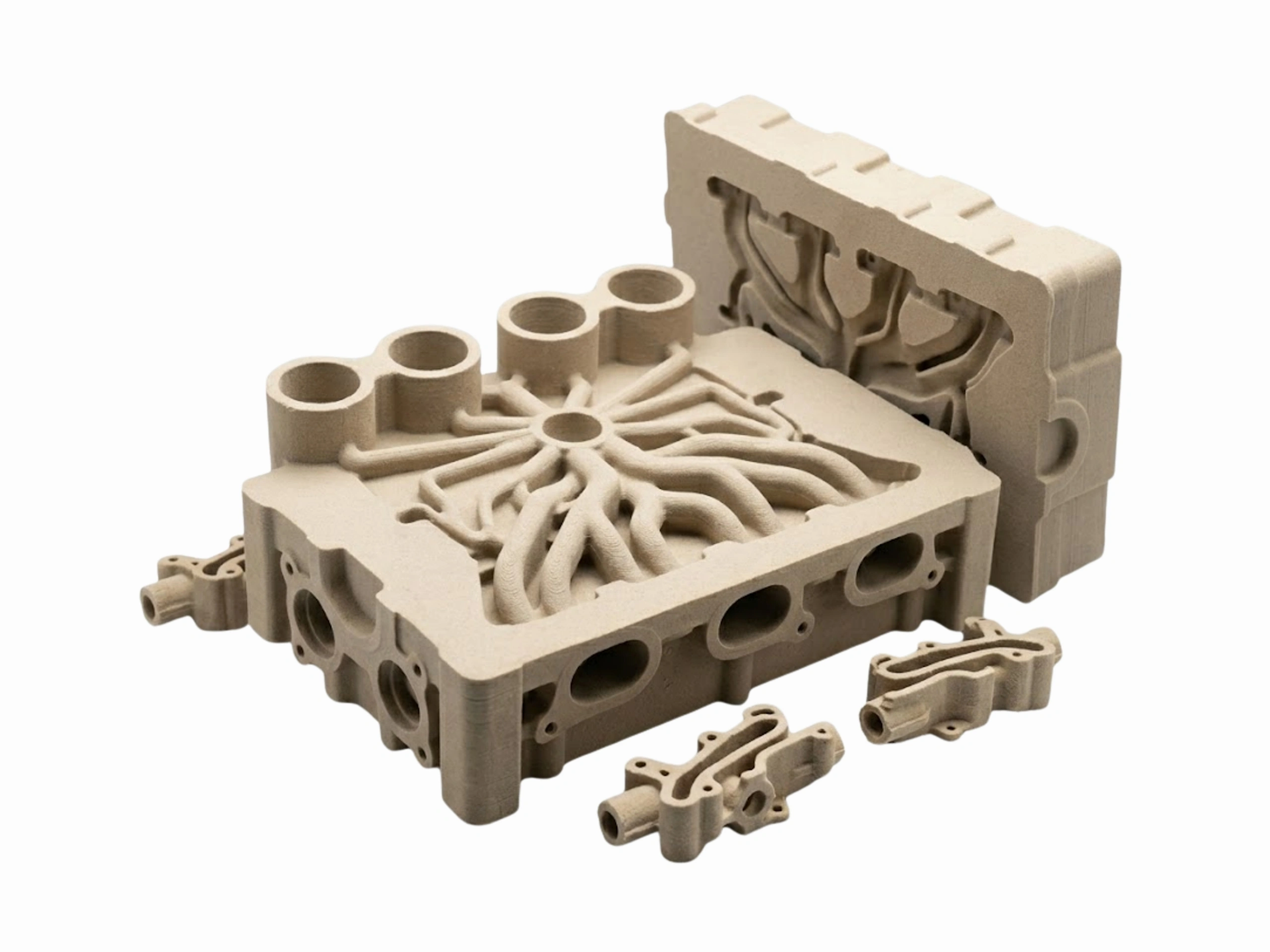
Typical Workpieces
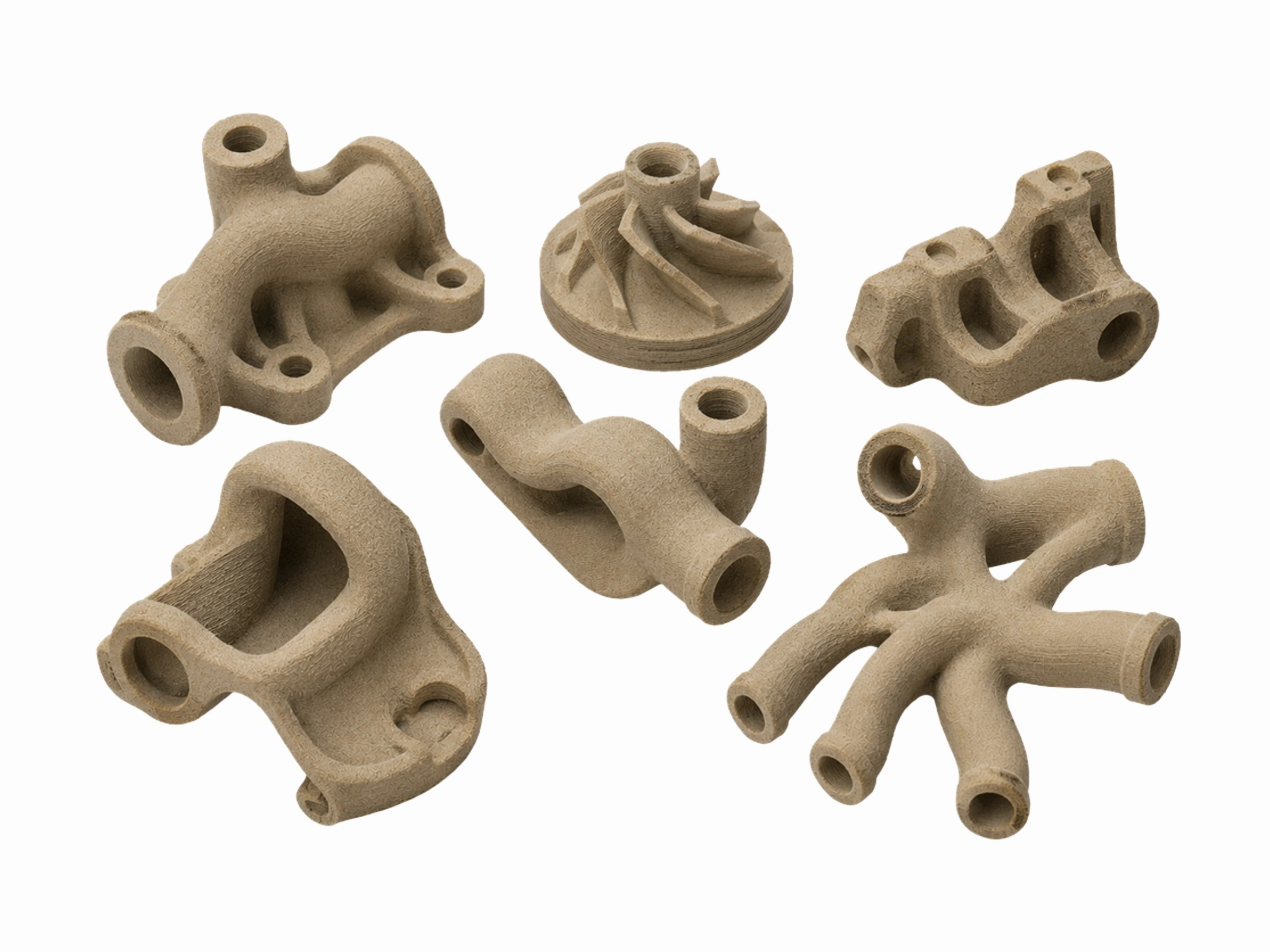
Frequently Asked Questions
What does binder-jet 3D sand printing actually do?
The printer builds a sand mould one layer at a time. For each layer, a recoater spreads a thin layer of resin-coated sand across the build area; a print-head then deposits a furan binder selectively onto the sand wherever the cross-section of the mould exists. When the print is complete the loose sand is brushed away, leaving the finished mould or core ready for pouring — with no pattern, no core box, and no parting line.
When does 3D sand printing make economic sense versus conventional moulding?
Three situations. First, prototypes and short-run castings where the cost of pattern tooling cannot be amortised. Second, complex internal geometries (water jackets, oil galleries, complex cores) that would require many separate core boxes in conventional production. Third, design iteration — a CAD change becomes a new print overnight, not a new pattern in six weeks. For high-volume series production with simple geometry, conventional moulding usually remains cheaper per part.
What sand and binder system does the FVX2000 use?
The printer uses furan-bonded silica sand — the binder is a phenolic furan resin activated by an acid catalyst pre-mixed into the sand. Sand permeability is ≥ 190, tensile strength is adjustable from 1.5 to 2.5 MPa, and burn loss stays within 1.4–1.6% — all within the range expected by Indian foundries for grey iron, ductile iron, aluminium and steel pouring.
How much can the FVX2000 produce in a day?
Approximately 2.5 tons of finished resin-sand mould per 24-hour cycle, running continuously with automatic sand and binder replenishment. Actual output depends on part density within the build envelope — densely packed cores produce more usable mould mass per day; large hollow shells produce less.
Why is the Stallion FVX2000 superior to competitor sand printers?
The 2000 × 1000 × 1000 mm build envelope handles complete passenger-car cylinder heads and most truck engine components in a single print — many competing platforms require splitting and bonding. The ±0.3 mm geometric accuracy and 200 dpi resolution are tuned to foundry production tolerances rather than rapid-prototyping aesthetics. The programmable controller and print-head are built around internationally proven names, with 24-hour continuous operation and integrated sand recovery designed for production-foundry duty cycles.