
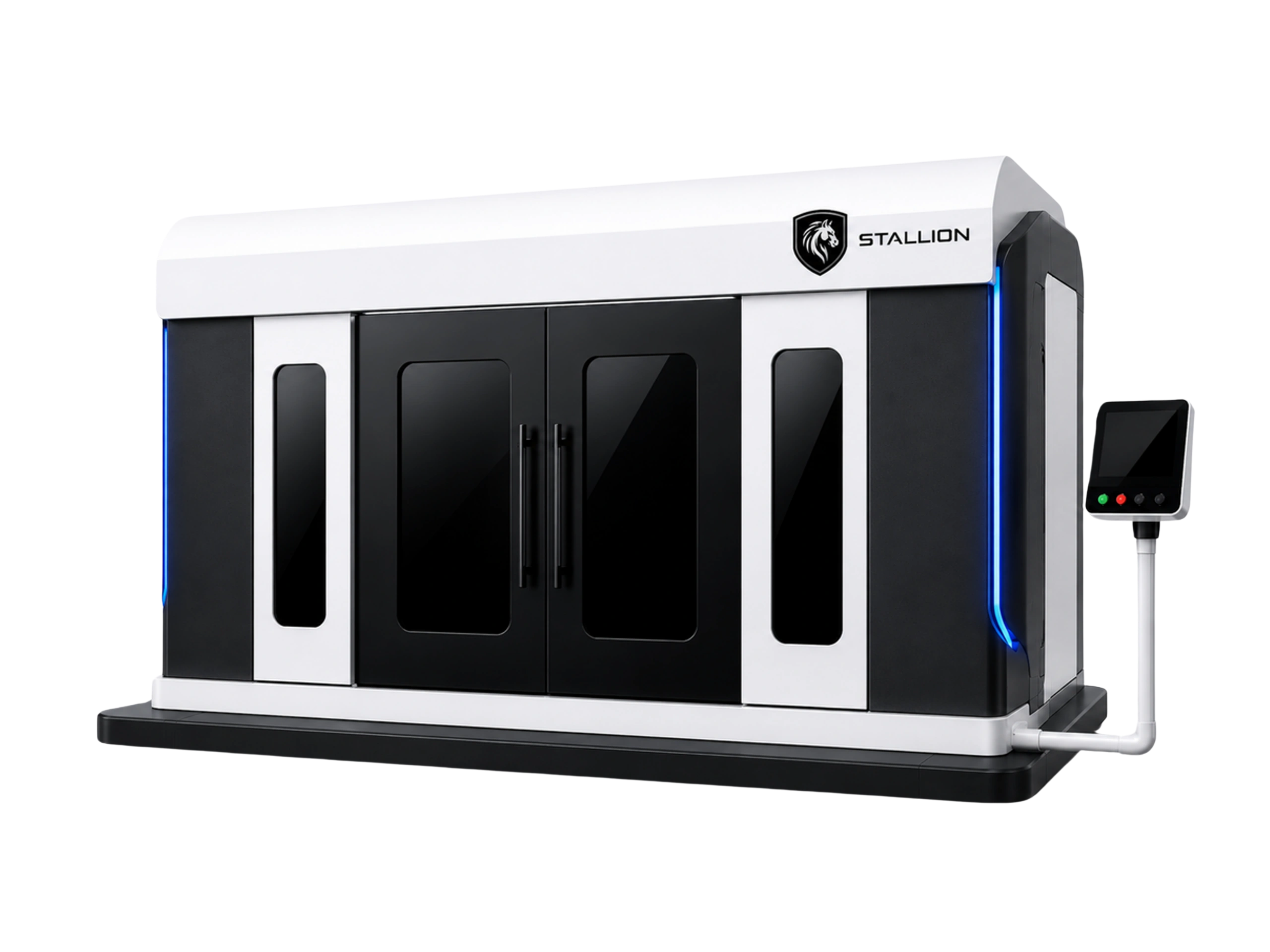
At A Glance
Operations Performed
Full Specifications
ST Series — Build Envelope, Throughput & Material Compatibility
| Specification | ST1616 | ST2016 | ST3020 | ST5040T |
|---|---|---|---|---|
| Build envelope L × W × H (mm) | 1600 × 1600 × 1600 | 2000 × 1600 × 1600 | 3000 × 2000 × 1500 | 5000 × 4000 × 1500 |
| Extruder type | FGF pellet | FGF pellet | FGF pellet | FGF pellet (twin) |
| Max extrusion rate (kg/hr) | 3–5 | 5–7 | 8–12 | 15–20 |
| Nozzle diameter range (mm) | 1.0–6.0 | 1.0–8.0 | 1.5–10.0 | 1.5–12.0 |
| Layer height (mm) | 0.3–3.0 | 0.3–3.5 | 0.5–4.0 | 0.5–5.0 |
| Heated build chamber | Yes (≤90°C) | Yes (≤90°C) | Yes (≤120°C) | Yes (≤120°C) |
| Build plate | Vacuum | Vacuum | Vacuum / Magnetic | Vacuum / Magnetic |
| Material — base | PP, ABS, PLA, PETG, PPS, ASA | PP, ABS, PLA, PETG, PPS, ASA | PP, ABS, PLA, PETG, PPS, ASA | PP, ABS, PLA, PETG, PPS, ASA |
| Material — composite | Carbon / glass / basalt fibre | Carbon / glass / basalt fibre | Carbon / glass / basalt fibre | Carbon / glass / basalt fibre |
| Positioning accuracy (mm) | ±0.05 | ±0.05 | ±0.08 | ±0.10 |
| Drive | Servo + linear guide | Servo + linear guide | Servo + linear guide | Twin-servo + linear guide |
Standard Features Optional Equipment
Standard Features
- Stainless steel build chamber with thermal insulation
- Pellet hopper with desiccant drying integration
- Closed-loop servo motion on X, Y, Z (Japanese servo motors)
- Linear guide rails (German-sourced) with dust shrouds
- Vacuum build plate (auto-engage)
- Touch-screen HMI with G-code preview
- Pellet-feed monitoring + low-material alarm
- Camera + remote print monitoring
- Emergency stop chain + door-interlock safety
Optional Equipment
- Magnetic build-plate quick-change (ST3020 / ST5040T)
- Twin-extruder configuration for dual-material printing
- Heated build platform up to 200°C (high-temperature engineering polymers)
- Active cooling fans for overhang stability
- Pellet bulk-supply system (25 / 50 / 100 kg hoppers with gravimetric metering)
- Inline fibre-reinforced compounding head
- CNC trim post-station for finish-machining the pattern
- Climate-controlled enclosure for warp-sensitive materials
- 5-day on-site operator training package
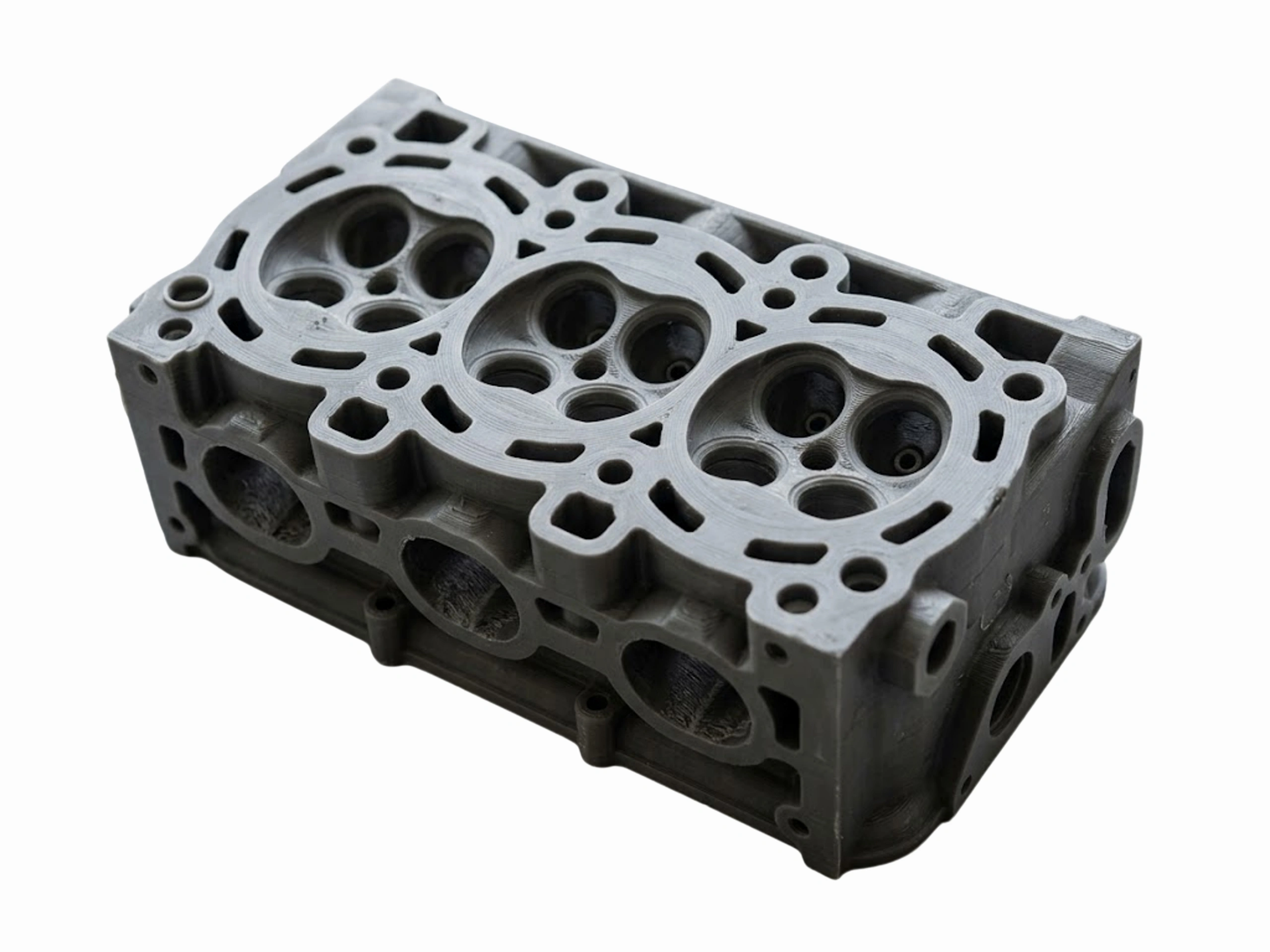
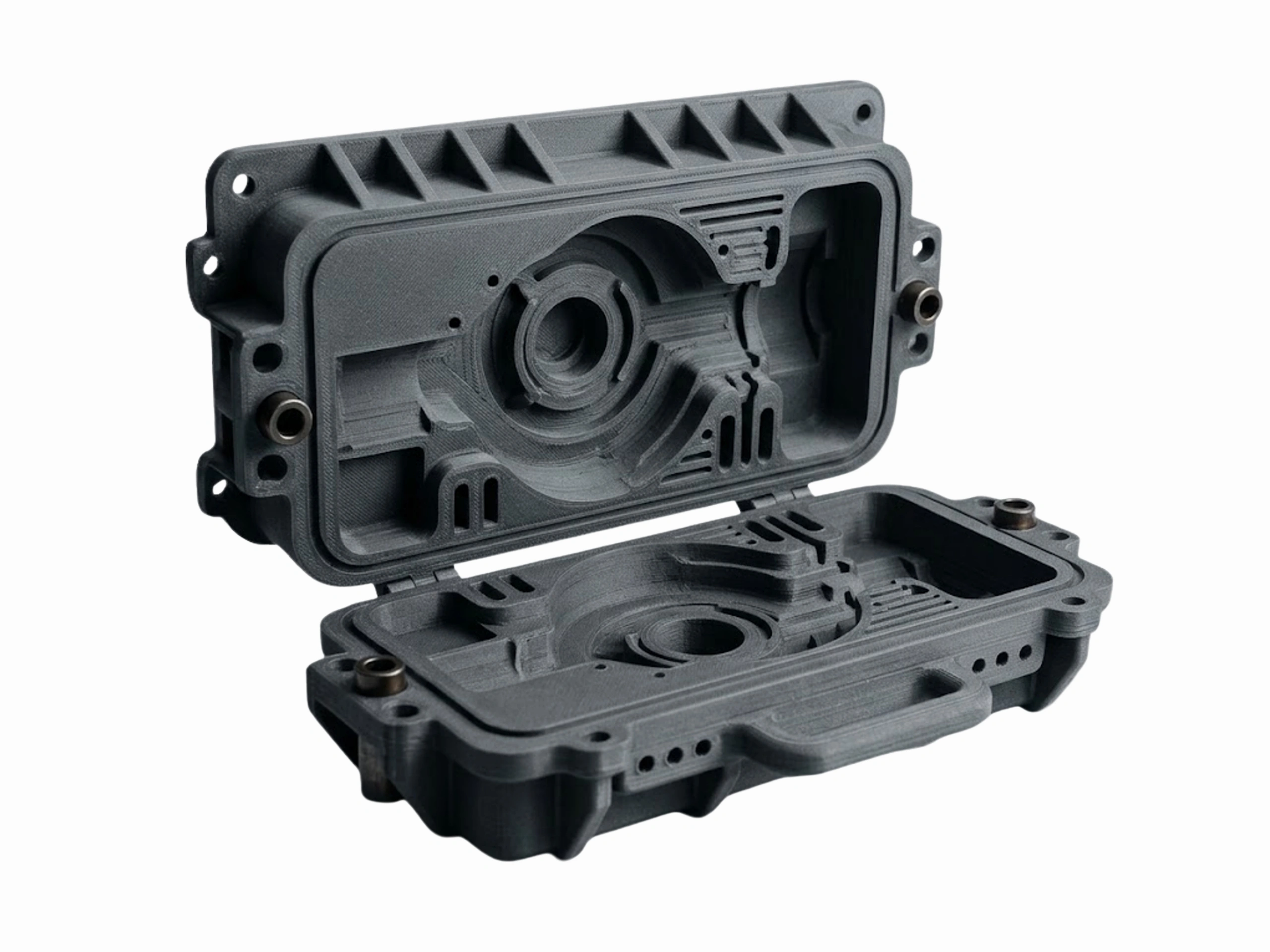
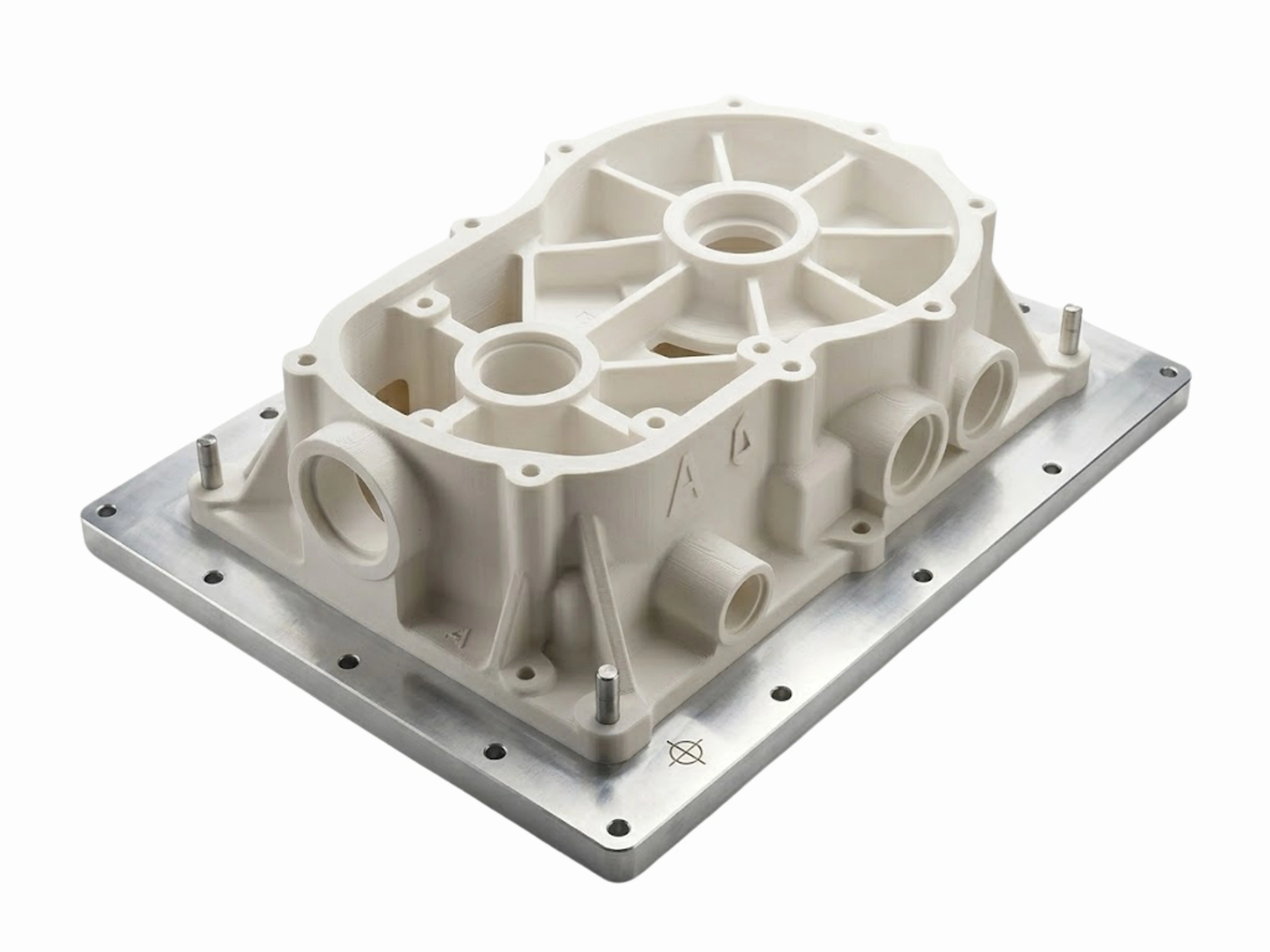
Typical Workpieces
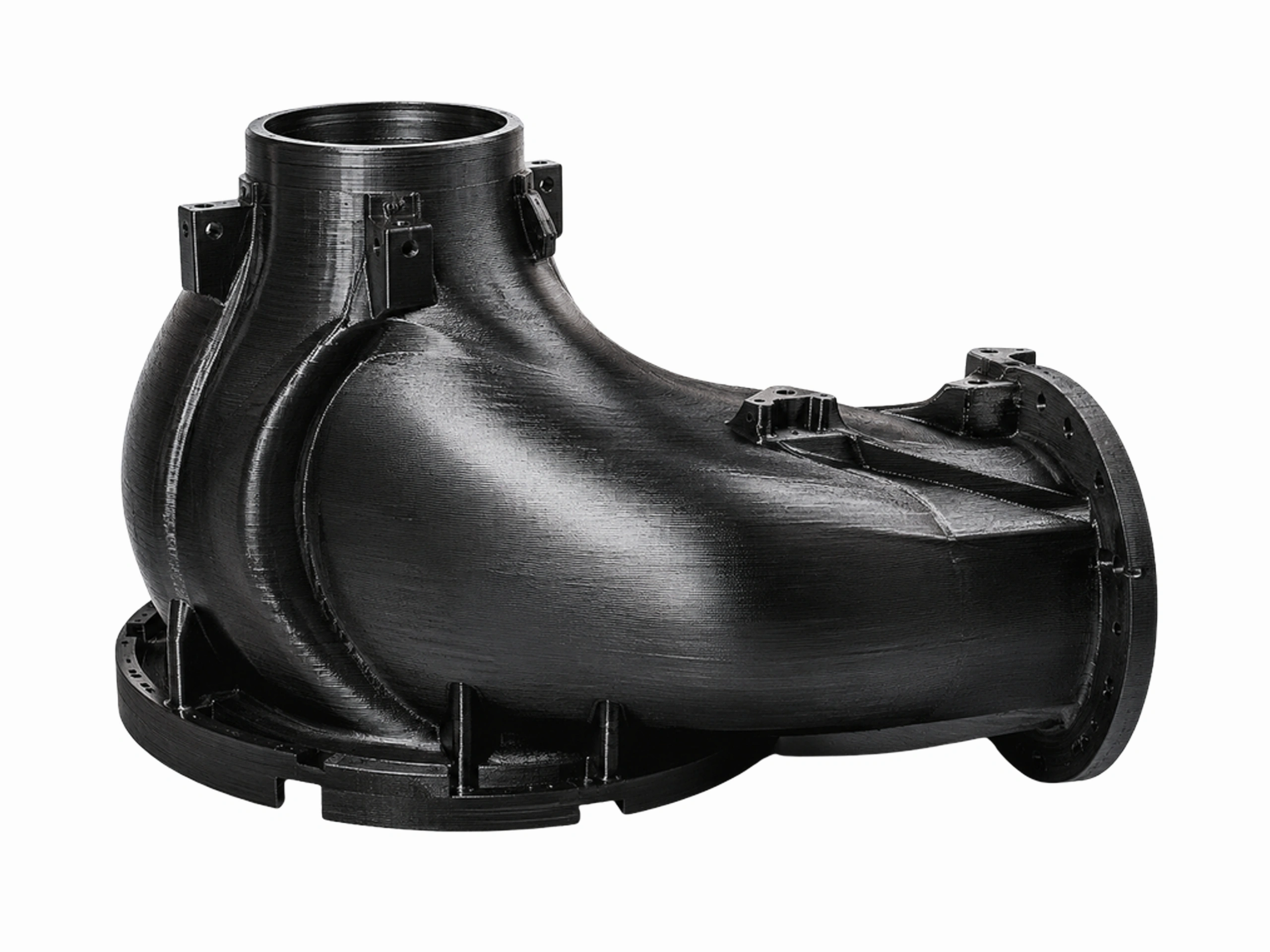
Frequently Asked Questions
What is Fused Granulate Fabrication (FGF) and how is it different from FFF?
FGF extrudes printed parts directly from thermoplastic pellets (granulate) rather than from spooled filament. Pellet feedstock is 5–10× cheaper than equivalent filament, supports a much wider material range including fibre-reinforced composites, and feeds throughput rates that are an order of magnitude higher than conventional filament FFF. This makes FGF the practical choice for large-format foundry-pattern production where build volumes are measured in cubic metres and print runs in days.
Which ST model matches our pattern production?
ST1616 for core boxes and small-to-medium patterns (1.6 m cube). ST2016 for medium patterns and most automotive applications. ST3020 for large patterns including truck engine components and aerospace tooling masters. ST5040T for very large industrial patterns, full-scale tooling and dimensional masters up to 5 metres long. Our engineering team scopes the model to your pattern envelope and annual throughput.
Can the printer use composite (fibre-reinforced) materials?
Yes. Carbon fibre, glass fibre, and basalt fibre composites are all supported across the ST range — typical reinforcement levels are 10–30% by weight in a base polymer (PP, ABS, PETG or PPS). Composites deliver patterns with higher stiffness, lower thermal expansion, and better dimensional stability under foundry-room conditions than unreinforced polymers.
What is the dimensional accuracy of a printed pattern?
Positioning accuracy is ±0.05 mm on ST1616 / ST2016, ±0.08 mm on ST3020 and ±0.10 mm on ST5040T. Finished pattern accuracy depends on material shrinkage and build geometry — for foundry pattern use, finished patterns are typically within ±0.3 mm overall, which is within standard pattern tolerance for sand-mould production. For tighter tolerance, an optional CNC trim post-station can be added.
Why is the Stallion ST Series superior to competitor pattern printers?
Pellet-fed FGF throughput on the ST series runs at 3 to 20 kg/hour — well beyond what filament-based FFF can sustain at large build volumes. The four-envelope range covers the full foundry pattern-shop matrix from core boxes to 5-metre tooling masters on a single control platform. Critical drive components (servos, linear guides, control electronics) are built around internationally proven names in Japan and Germany for sustained accuracy across multi-day prints.