
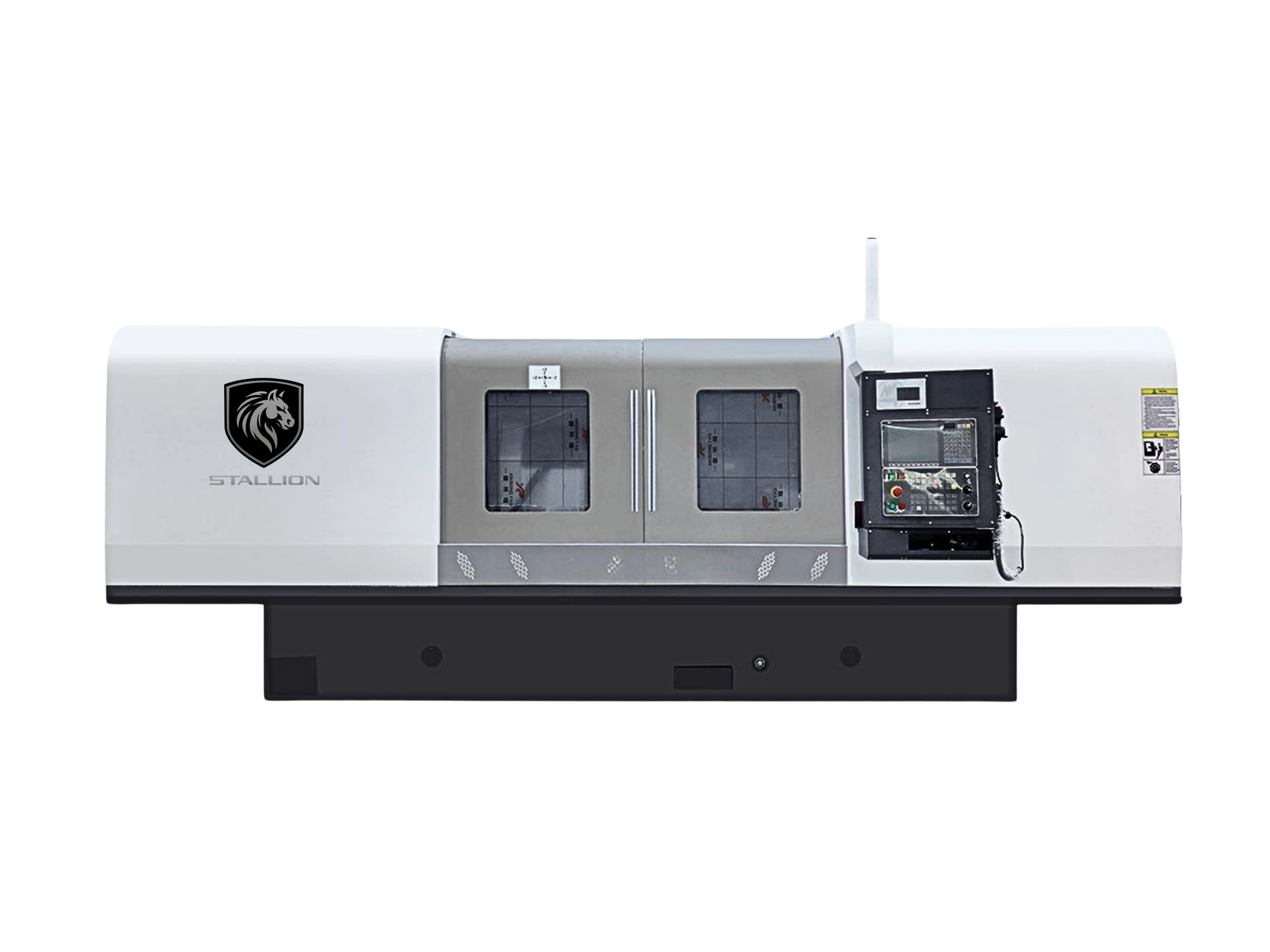
CNC Grinding Machine
Comprehensive Grinding Portfolio · Configured to Your Application
Full Specifications
Grinder Portfolio · Size Range By Category
| Grinder Category | Min Working Size | Max Working Size | Typical Applications |
|---|---|---|---|
| Surface Grinder | 300 × 150 mm | 1000 × 500 mm | Flat parts, dies, moulds, tool-room work |
| Double Column Surface Grinder | 1500 × 800 mm | 4000 × 2000 mm | Large dies, mould bases, structural parts |
| Cylindrical Grinder | Ø150 × 300 mm | Ø500 × 2000 mm | Shafts, rollers, spindles, automotive driveline |
| Centerless Grinder | Ø2 mm | Ø80 mm | Pins, bearings, fasteners, high-volume cylindrical parts |
| Internal Grinder | Ø10 mm bore | Ø400 mm bore | Bearing races, valve bores, precision sleeves |
| Vertical Grinder | Ø300 mm | Ø1000 mm | Brake discs, hubs, large flanges, ring components |
| Tool & Cutter Grinder | 5-axis CNC | Up to Ø320 mm tool | Endmills, drills, taps, reamers, custom cutting tools |
Frequently Asked Questions
What types of CNC grinders does Stallion offer? +
The Stallion CNC grinding portfolio covers the full range of grinding categories: surface grinders (single-column and double-column), cylindrical grinders, centerless grinders, internal grinders, vertical grinders, and tool & cutter grinders (including 5-axis). Each category is offered across multiple sizes — from compact tool-room machines through to heavy-duty production-scale platforms — and configured to the customer's workpiece and throughput requirements.
What's the difference between surface, cylindrical, centerless, internal and vertical grinding? +
Surface grinding finishes flat surfaces using a horizontal or vertical wheel. Cylindrical grinding finishes the outer diameter of rotating cylindrical workpieces (shafts, rollers). Centerless grinding holds the workpiece between a grinding wheel and a regulating wheel without centres — used for high-volume cylindrical production (pins, bearings). Internal grinding finishes precision bores. Vertical grinding holds the workpiece vertically with gravity assistance — ideal for brake discs, hubs and large disc-shaped parts.
Which industries use Stallion CNC grinding machines? +
Automotive driveline (gears, shafts, brake discs, hubs), bearing manufacturing (races, rollers, cages), valve and hydraulic component production (spools, bores, sleeves), aerospace (precision shafts, structural components), tool-room and die-making (inserts, moulds, custom cutting tools), and precision engineering. The Stallion grinding portfolio covers everything from sub-Ø10 mm centerless work to 4000 × 2000 mm double-column surface grinding.
How does Stallion configure a grinding machine to a specific application? +
Each Stallion grinding machine is configured to the customer's specific workpiece geometry, material, target tolerance band, surface finish requirement and production volume. The application engineering team recommends the correct grinder category, specifies wheel size, spindle, control system and automation interface, and returns a tailored machine specification with indicative pricing.
Why is Stallion's CNC grinding portfolio superior to competitor offerings? +
The Stallion grinding portfolio covers every major precision grinding application — surface, cylindrical, centerless, internal, vertical and tool & cutter — on platforms built around vibration-damping cast-iron foundations, precision-ground guideways and closed-loop position feedback for micron-level accuracy retention across long production runs. Critical components including spindle bearings, ball screws, linear guideways and CNC controls are sourced from leading international suppliers across Japan, Germany, Taiwan and Europe for maximum quality and long-term grinding accuracy.