Technical Data
Full Specifications
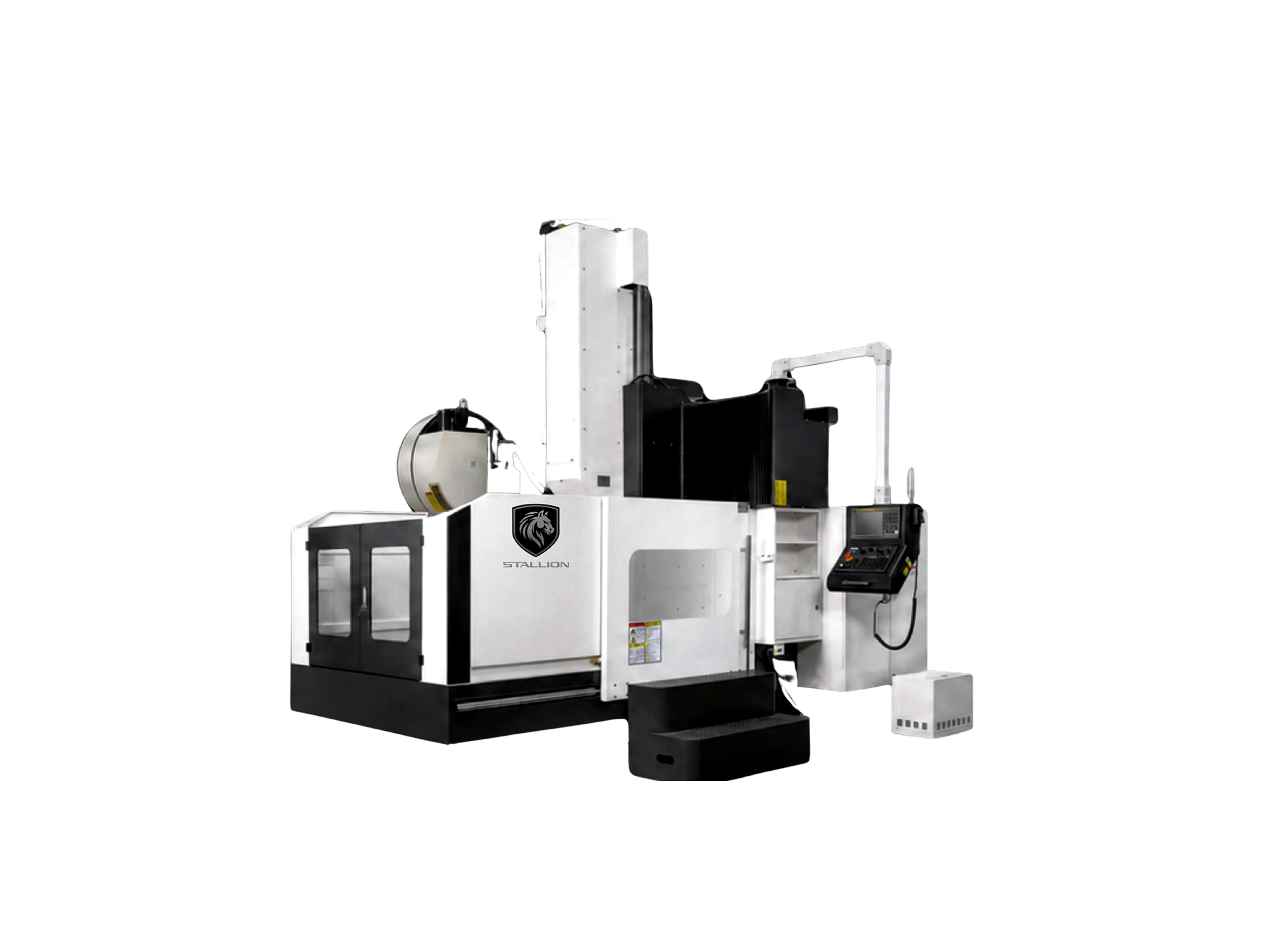
Standard Models (SM-1613Z to SM-3225)
| Specification | SM-1613Z | SM-2015Z | SM-2519Z | SM-3225 |
|---|---|---|---|---|
| X / Y / Z travel (mm) | 1600 × 1300 × 800 | 2000 × 1500 × 800 | 2500 × 1900 × 800 | 3200 × 2500 × 950 |
| Worktable size (mm) | 1700 × 1200 | 2100 × 1200 | 2700 × 1600 | 3000 × 2000 |
| Gantry width (mm) | 1,400 | 1,500 | 1,900 | 2,500 |
| Max table load (kg) | 3,000 | 3,500 | 8,000 | 15,000 |
| Spindle speed (rpm) | 50–6,000 | 50–6,000 | 50–6,000 | 50–6,000 |
| Spindle taper | BT-50 | BT-50 | BT-50 | BT-50 |
| Main motor power (kW) | 15 / 18.5 | 15 / 18.5 | 15 / 18.5 | 15 / 18.5 |
| Rapid traverse X/Y/Z (m/min) | 15 / 15 / 10 | 15 / 15 / 10 | 12 / 15 / 10 | 12 / 15 / 10 |
| CNC system | FANUC | FANUC | FANUC | FANUC |
Heavy-Duty Models (HSM-3221 to HSM-8032)
| Specification | HSM-3221 | HSM-4221 | HSM-4225 | HSM-8032 |
|---|---|---|---|---|
| X / Y / Z travel (mm) | 3200 × 2100 × 950 | 4200 × 2100 × 950 | 4200 × 2500 × 950 | 8200 × 3800 × 1250 |
| Worktable size (mm) | 3000 × 1800 | 4000 × 1800 | 4000 × 2000 | 8000 × 2800 |
| Gantry width (mm) | 2,100 | 2,100 | 2,500 | 3,200 |
| Max table load (kg) | 12,000 | 15,000 | 18,000 | 35,000 |
| Spindle speed (rpm) | 50–6,000 | 50–6,000 | 50–6,000 | 50–6,000 |
| Spindle taper | BT-50 | BT-50 | BT-50 | BT-50 |
| Main motor power (kW) | 15 / 18.5 | 15 / 18.5 | 15 / 18.5 | 22 / 26 |
| Rapid traverse X/Y/Z (m/min) | 12 / 10 / 10 | 10 / 10 / 10 | 10 / 10 / 10 | 8 / 10 / 10 |
| CNC system | FANUC | FANUC | FANUC | FANUC |
Build & Equipment
Standard Features Optional Equipment
Standard Features
- Oversized columns, beams & reinforced box structures
- Nitrogen-hydraulic Z-axis counterweight
- Roller linear guideways (X / Y axes)
- Roller linear or hard rail (Z-axis)
- Rail-step structural design
- 24+ tool magazine
- BT-50 spindle interface
Optional Equipment
- Hard rail Z-axis upgrade
- Higher-capacity tool magazine
- Through-tool coolant
- Linear scale feedback
- Custom larger envelopes (>8 m available on request)
Applications
Typical Workpieces
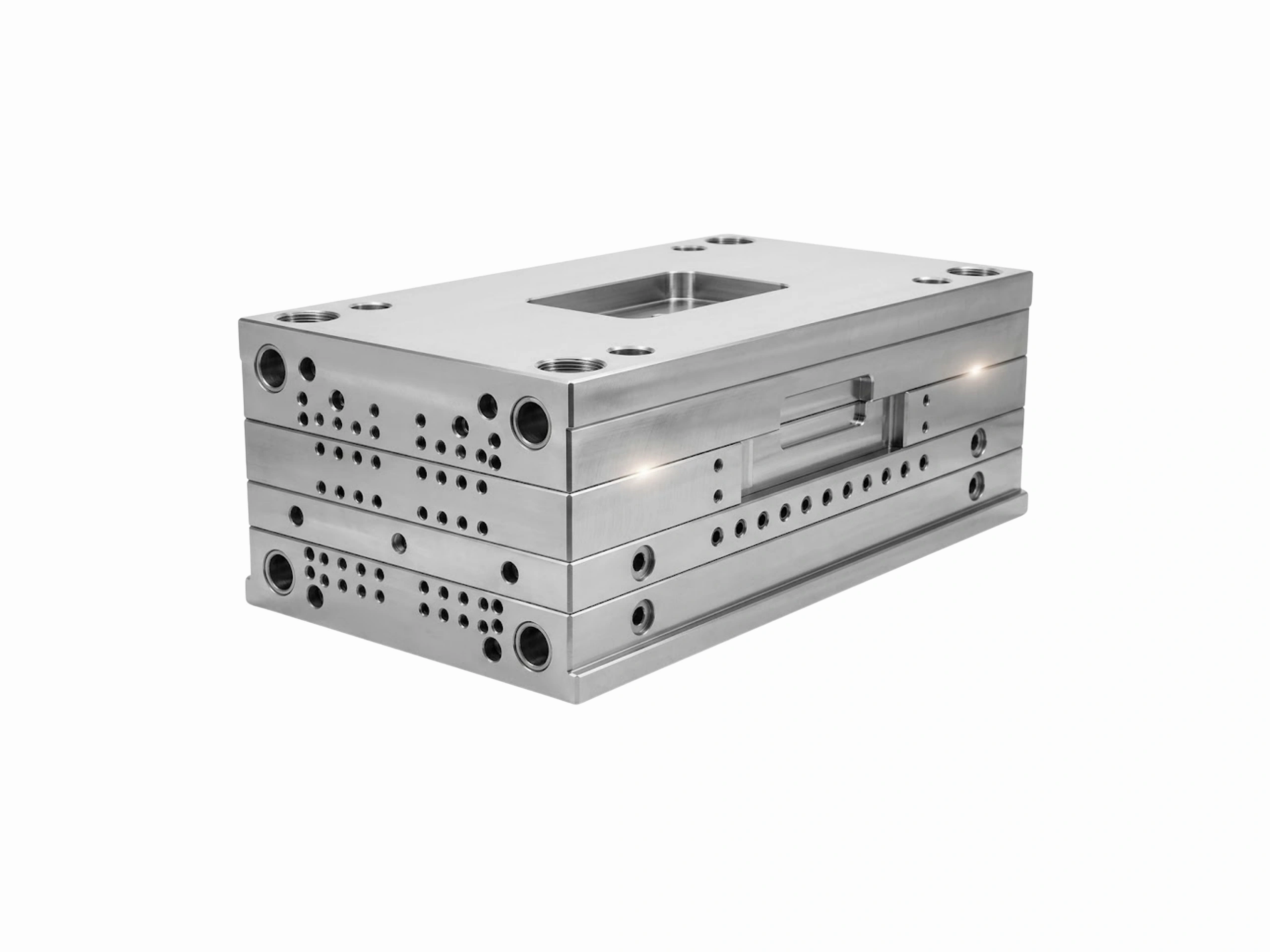
Mould Bases
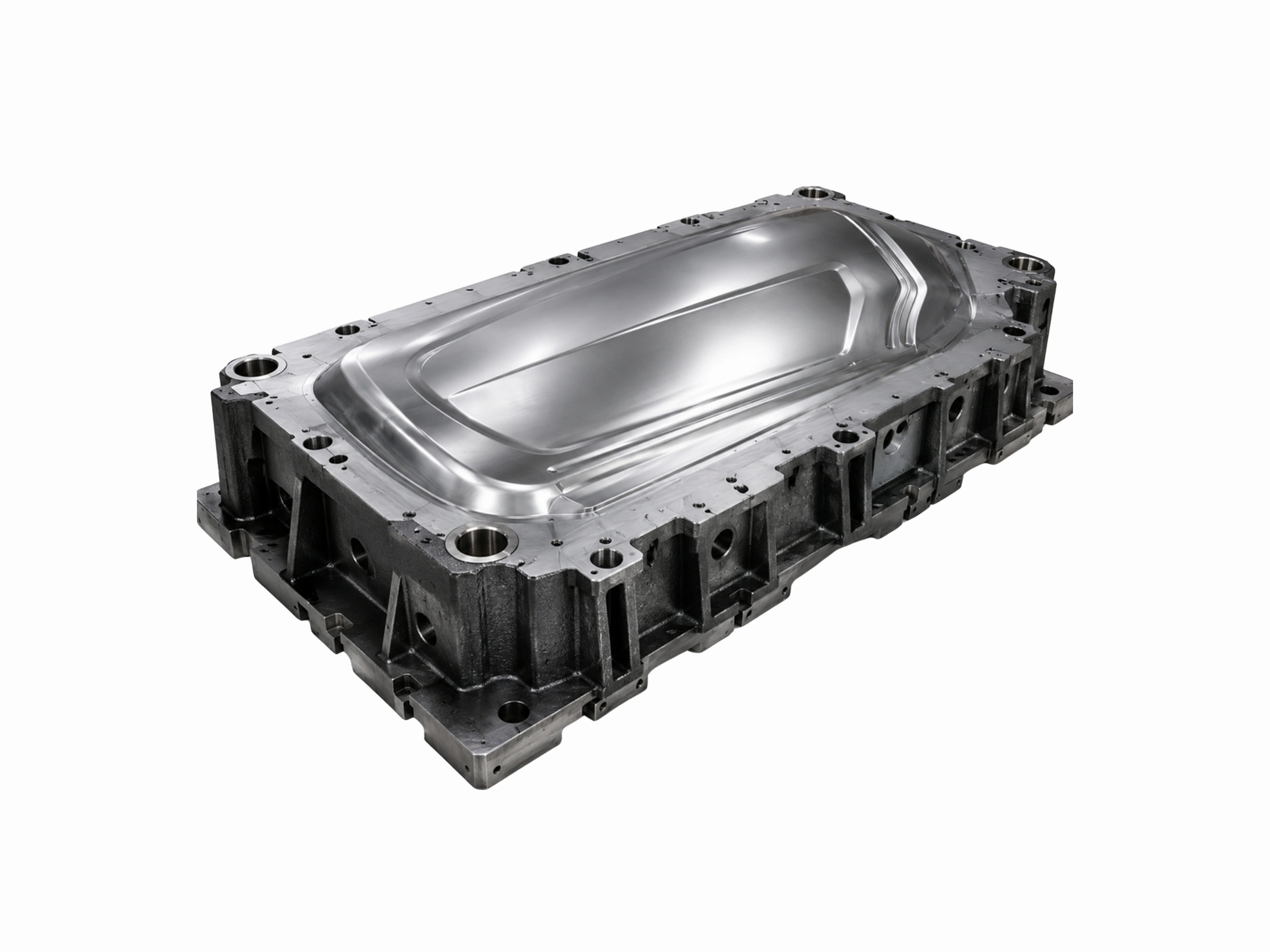
Auto Body Dies
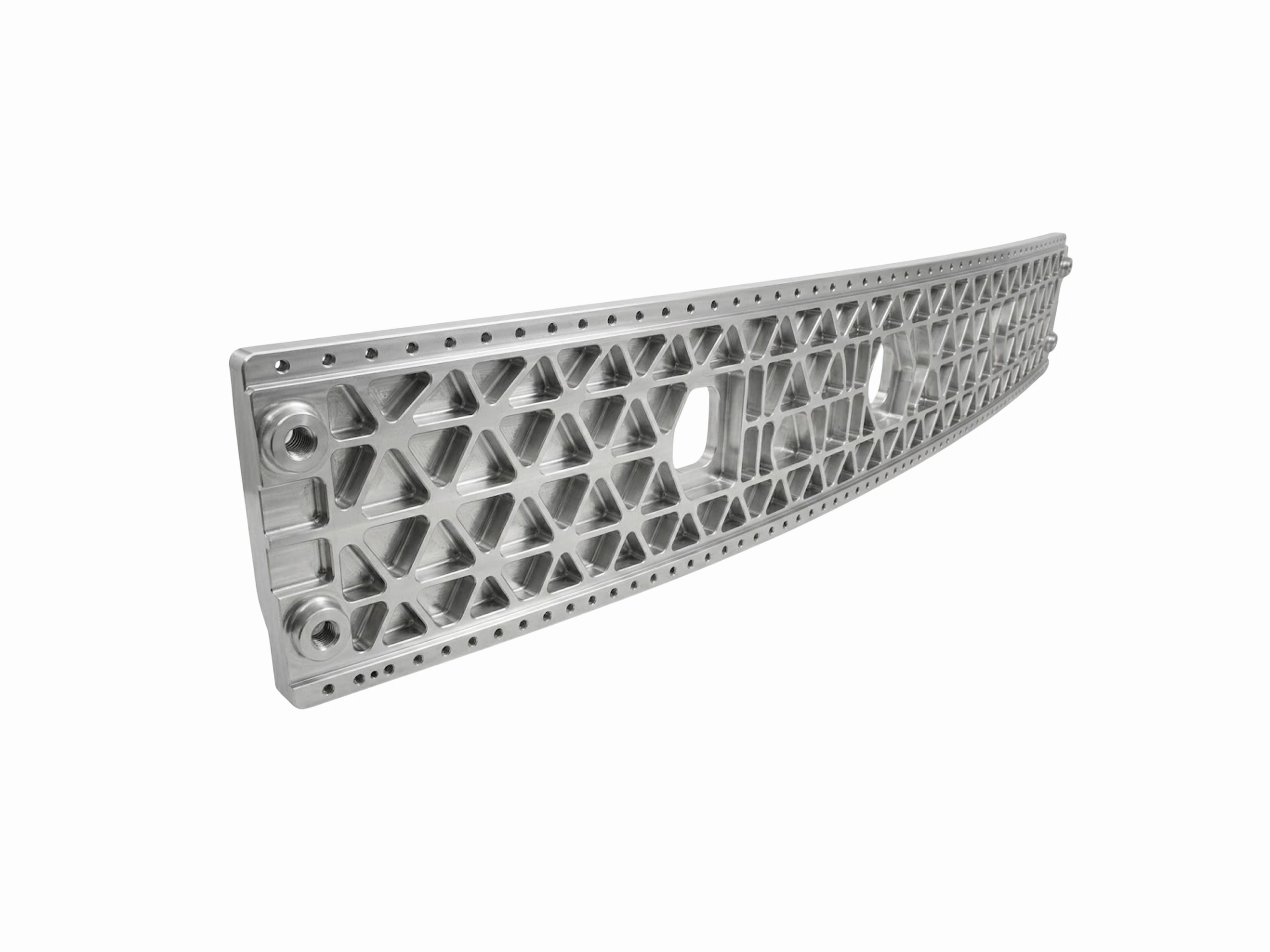
Aerospace Structures
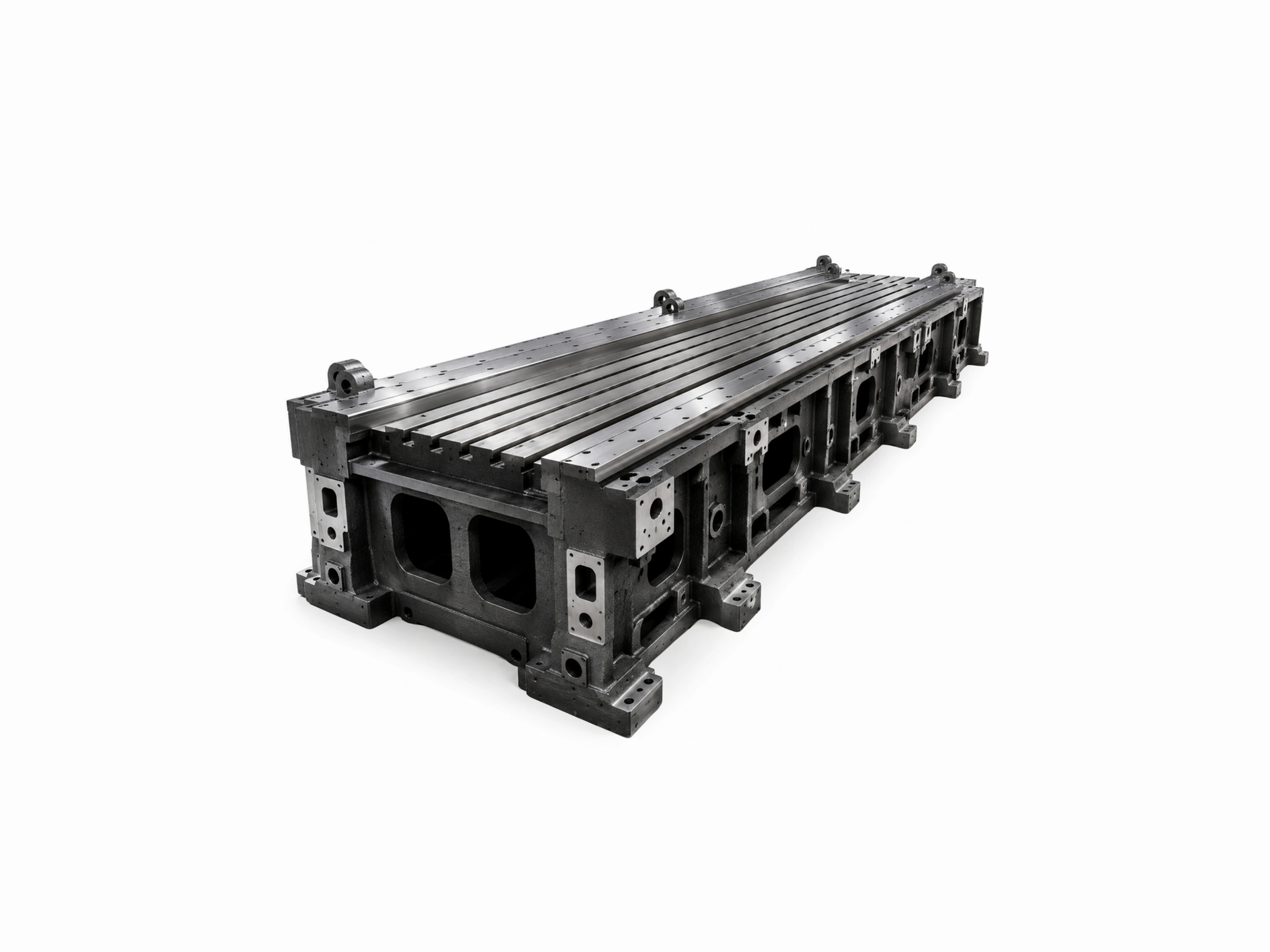
Heavy Castings
Answers
Frequently Asked Questions
What is a gantry or double-column machining centre?
A gantry machining centre uses a bridge-like structure with two columns supporting an overhead cross-beam on which the spindle traverses — over a large stationary worktable. This double-column or gantry configuration delivers exceptional rigidity for very
Why is a gantry MC preferred for large parts and moulds?
Gantry architecture distributes cutting forces evenly across two columns, providing better rigidity per unit of worktable size than single-column machines. This makes them the standard choice for large mould bases, automotive body dies, aerospace structur
What does nitrogen hydraulic counterbalance do?
The Z-axis spindle head is heavy. A nitrogen-hydraulic counterweight system uses pressurised nitrogen gas to balance this weight — reducing the load on the Z-axis ball screw and servo motor, improving response time, increasing positioning accuracy, and ex
What is the largest workpiece the SM Series can handle?
The HSM-8032 supports an 8,000 × 2,800 mm worktable with a 35,000 kg maximum load and X-axis travel of 8,200 mm. Customised configurations up to 16 metres are also available on request — making Stallion gantry platforms suitable for the largest mould-base
Why is the Stallion SM Series superior to competitor gantry machines?
The SM Series is built around an overweight-bearing body with oversized columns and reinforced box structures, a nitrogen-hydraulic Z-axis counterweight, and roller linear guideways with rail-step design — combining heavy-cut rigidity with smooth, crawl-f