At A Glance
Operations Performed
Full Specifications
FX4 Cold-Box Core Shooter (Small-to-Medium Cores)
| Specification | FMU1-S | FMU1-M | FMU1-L |
|---|---|---|---|
| Mould opening daylight (mm) | 450 | 600 | 800 |
| Max mould weight (kg) | Max mould weight (kg) | 1,200 | 2,500 |
| Tilt range | 0° – 95° | 0° – 95° | 0° – 100° |
| Tilt drive | Hydraulic | Hydraulic | Hydraulic |
| Tilt cycle time (sec, full sweep) | 6–10 | 8–12 | 10–15 |
| Mould heating zones | 3 (cope / drag / core) | 3 | 3 |
| Hydraulic power pack (kW) | 5.5 | 7.5 | 11 |
| PLC controller | Japan OMRON | Japan OMRON | Japan OMRON |
FMU2 — Hydraulic Static Gravity Casting
| Specification | FMU2-S | FMU2-M | FMU2-L |
|---|---|---|---|
| Mould opening daylight (mm) | 500 | 700 | 900 |
| Max mould weight (kg) | 800 | 1,500 | 3,000 |
| Casting orientation | Static (hand-pour) | Static (ladle-pour) | Static (auto-ladle) |
| Clamping force (kN) | 120 | 200 | 350 |
| Mould heating zones | 3 | 3 | 4 |
| Cycle time (typical, sec) | 90–150 | 120–180 | 180–240 |
| Core insert station | Manual | Manual / Optional Robot | Robot-fed |
FMU/R Series — Servo 4-Column Rotary Casting
| Specification | FMU/R-120 | FMU/R-180 | FMU/R-240 |
|---|---|---|---|
| Tilt range | -20° / +100° | -20° / +110° | -20° / +110° |
| Tilt drive | Servo (Japan Yaskawa) | Servo (Japan Yaskawa) | Servo (Japan Yaskawa) |
| Tilt accuracy | ±0.05° | ±0.05° | ±0.05° |
| Column configuration | 4-column | 4-column | 4-column |
| Max mould weight (kg) | 1,500 | 2,500 | 4,000 |
| Mould opening daylight (mm) | 650 | 850 | 1,050 |
| Pour programmable points | 20 | 30 | 40 |
| Cycle time (typical, sec) | 60–90 | 80–120 | 100–150 |
FCL — Cylinder Head Gantry-Robot Casting Line
| Specification | FCL-Single | FCL-Twin | FCL-Island |
|---|---|---|---|
| Stations per line | 1 casting + cooling | 2 casting + cooling | 4 casting + core insert + cooling + inspection |
| Core inserting | Gantry robot | Gantry robot | Anthropomorphic 6-axis ABB |
| Pouring | Auto-ladle | Auto-ladle | Auto-ladle + pour-weight sensing |
| Output (cylinder heads / shift) | ~60 | ~120 | ~240 |
| Floor footprint (m²) | ~80 | ~140 | ~280 |
| Control architecture | PLC + HMI | PLC + HMI | PLC + SCADA + cell controller |
Standard Features Optional Equipment
Standard Features
- Hydraulic system with proportional valve control
- Servo-driven tilt axis on FMU/R series (Japan Yaskawa)
- Japan OMRON PLC + colour touch-screen HMI
- Japan NSK precision bearings on tilt & slide axes
- Mould heating control — separate cope / drag / core zones
- Sand core inserting station (manual on FMU1/2; robot on FMU/R, FCL)
- Mould-coating sprayer with adjustable nozzle pattern
- Quench / cooling station with timer-controlled tilt-back
- Safety light curtain + dual-handed start interlock
- Centralised lubrication with low-level alarm
Optional Equipment
- Anthropomorphic 6-axis ABB robot for ladling (FCL Island variant)
- Electrostatic mould-coating system (lower coating waste)
- In-mould pressurised cooling for cycle reduction
- In-mould pressurised cooling for cycle reduction
- In-mould pressurised cooling for cycle reduction
- In-mould pressurised cooling for cycle reduction
- In-mould pressurised cooling for cycle reduction
- Multi-zone mould-temperature controller (oil-based, ≤350°C)
- Vacuum-assist pour for thin-section castings
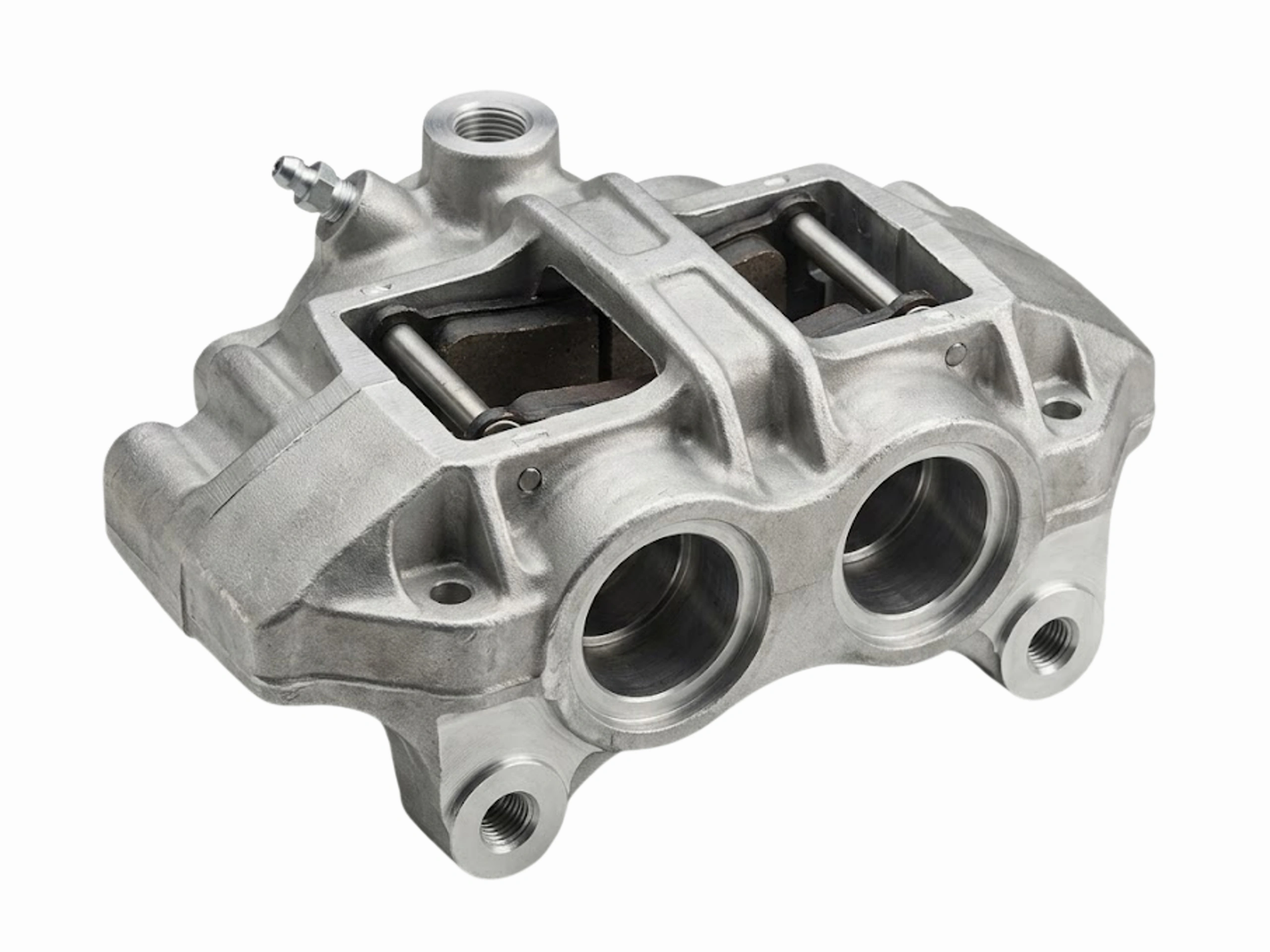
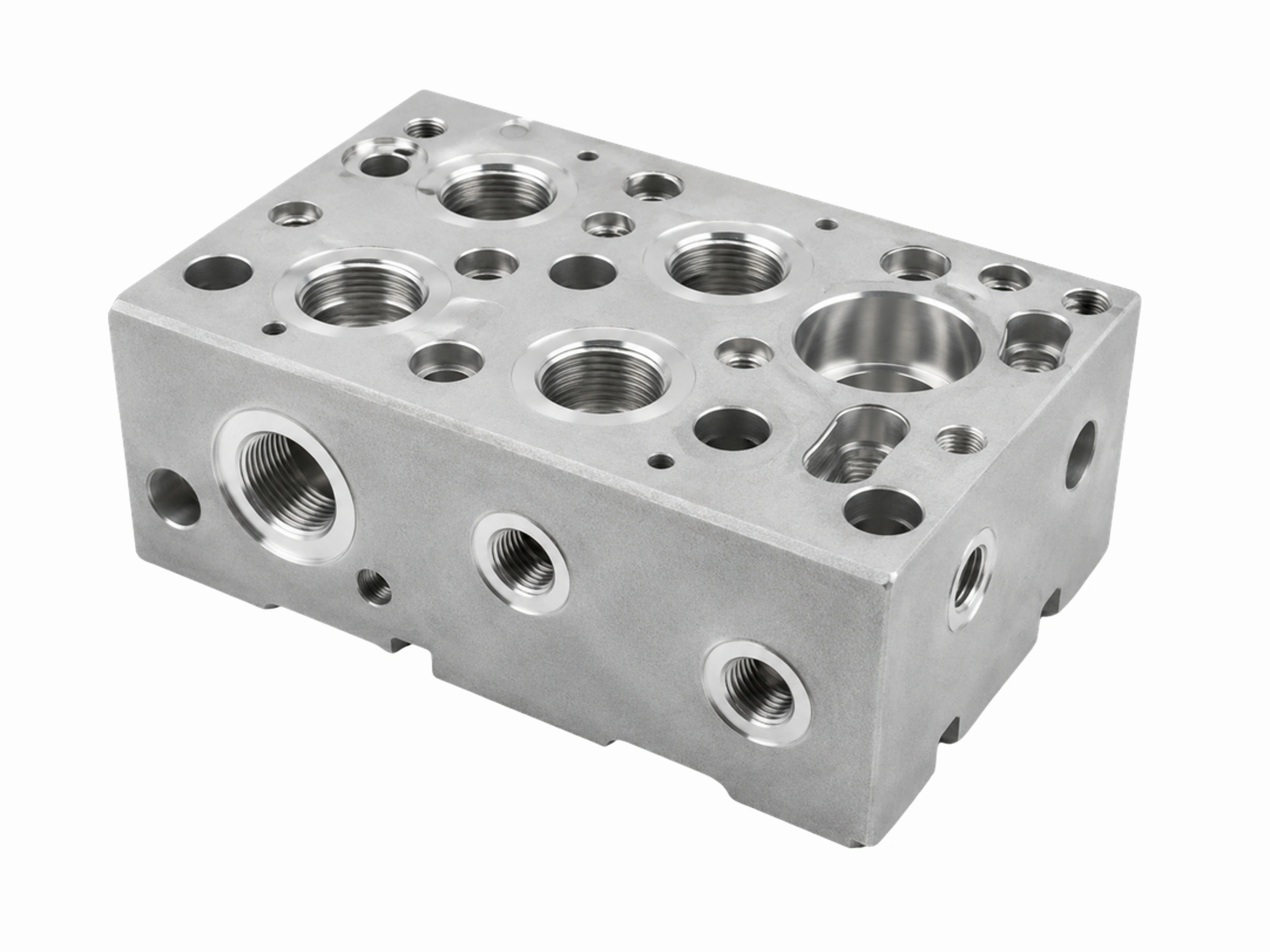
Typical Workpieces
Frequently Asked Questions
What is gravity casting and where does it fit between LPDC and sand moulding?
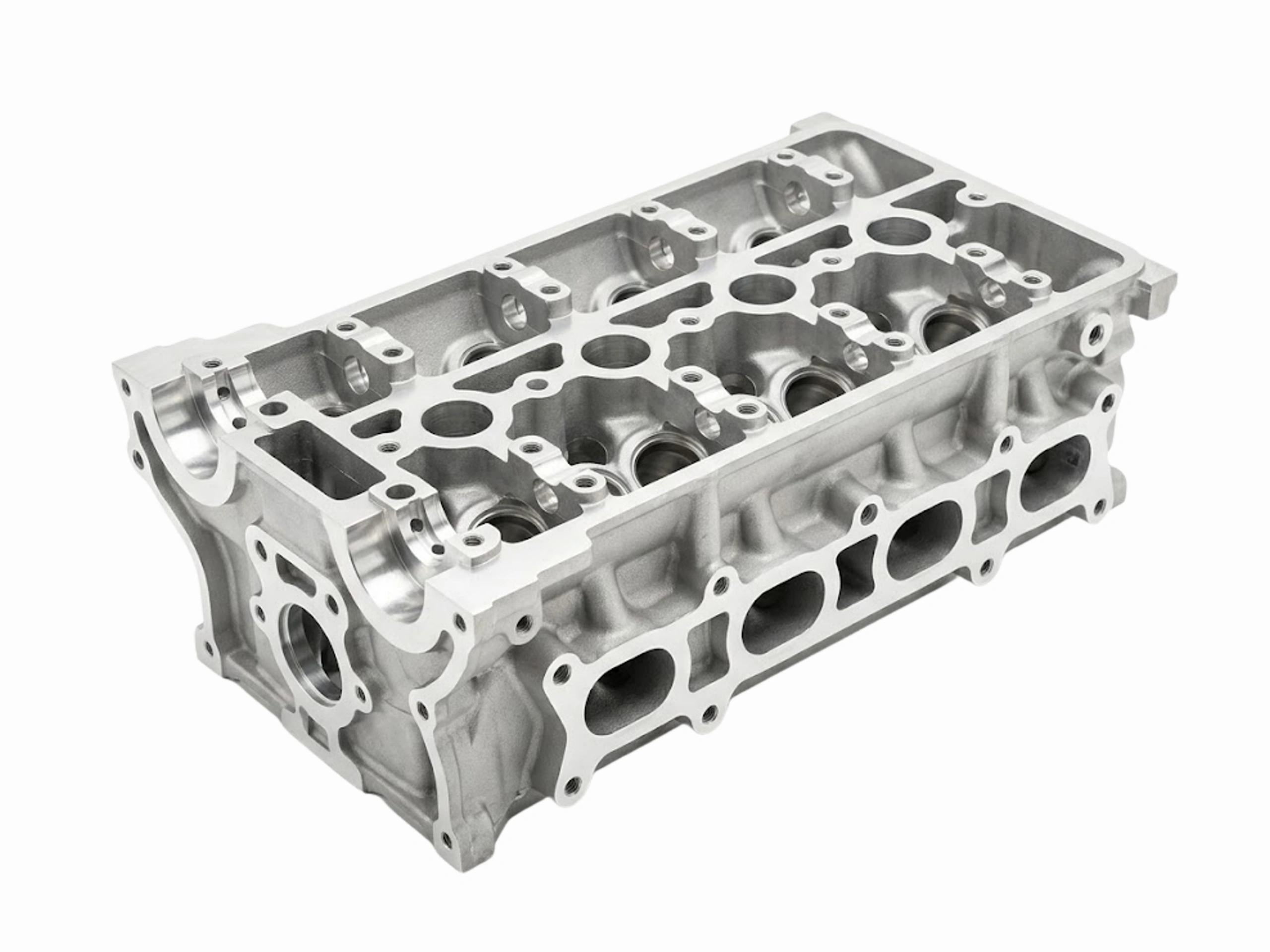
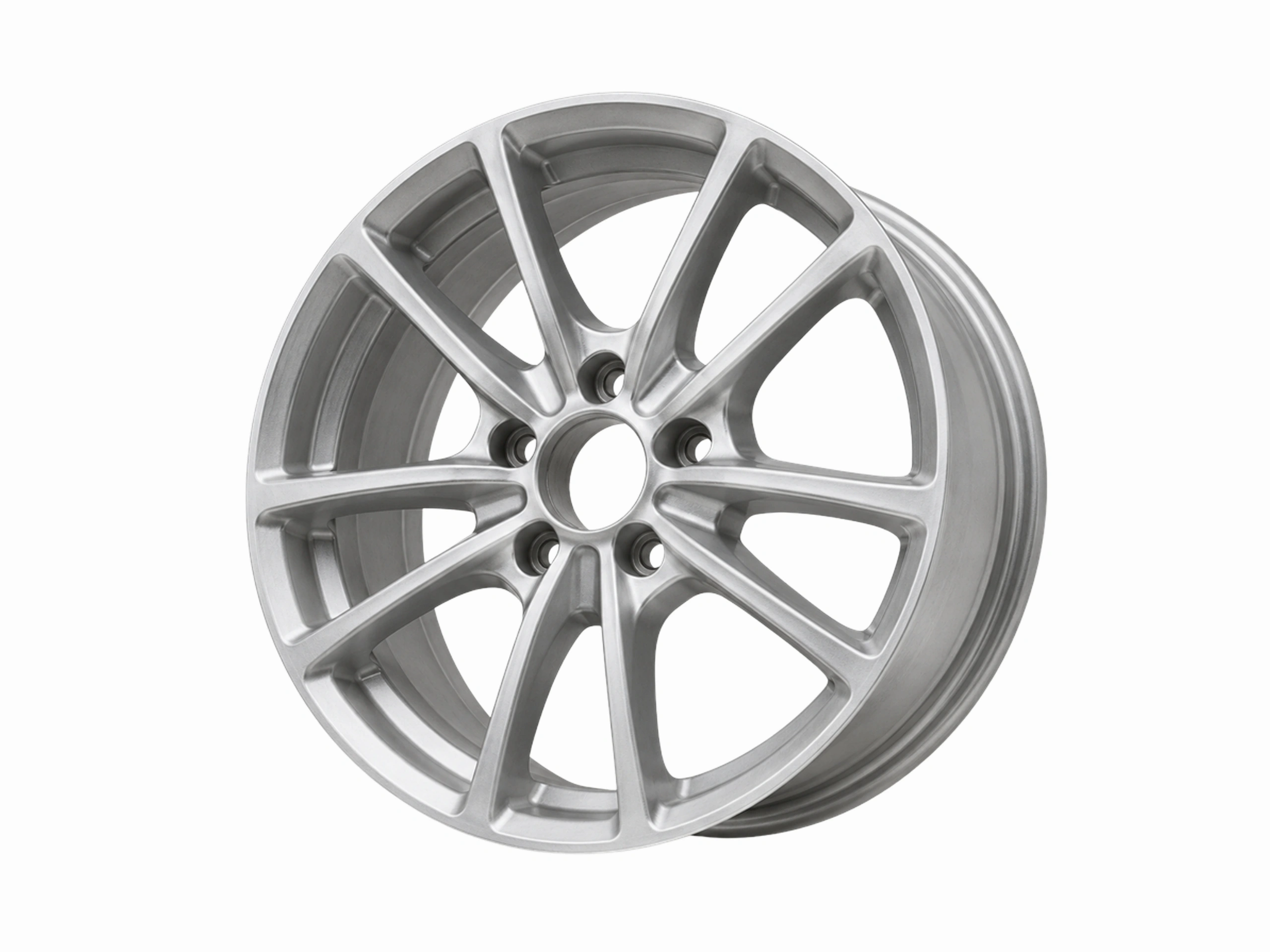
Gravity casting (also called permanent-mould casting) pours molten metal into a reusable metal mould under gravity alone — no pressure injection (like HPDC) and no gas pressure assist (like LPDC). It produces dense, fine-grain aluminium castings with excellent mechanical properties — better than sand moulding for thin sections, less capital-intensive than LPDC for medium-volume production. Best fit: aluminium cylinder heads, wheels, brake components and manifolds in the 1,000 to 100,000 parts-per-year range.
Which platform should I pick for my part family?
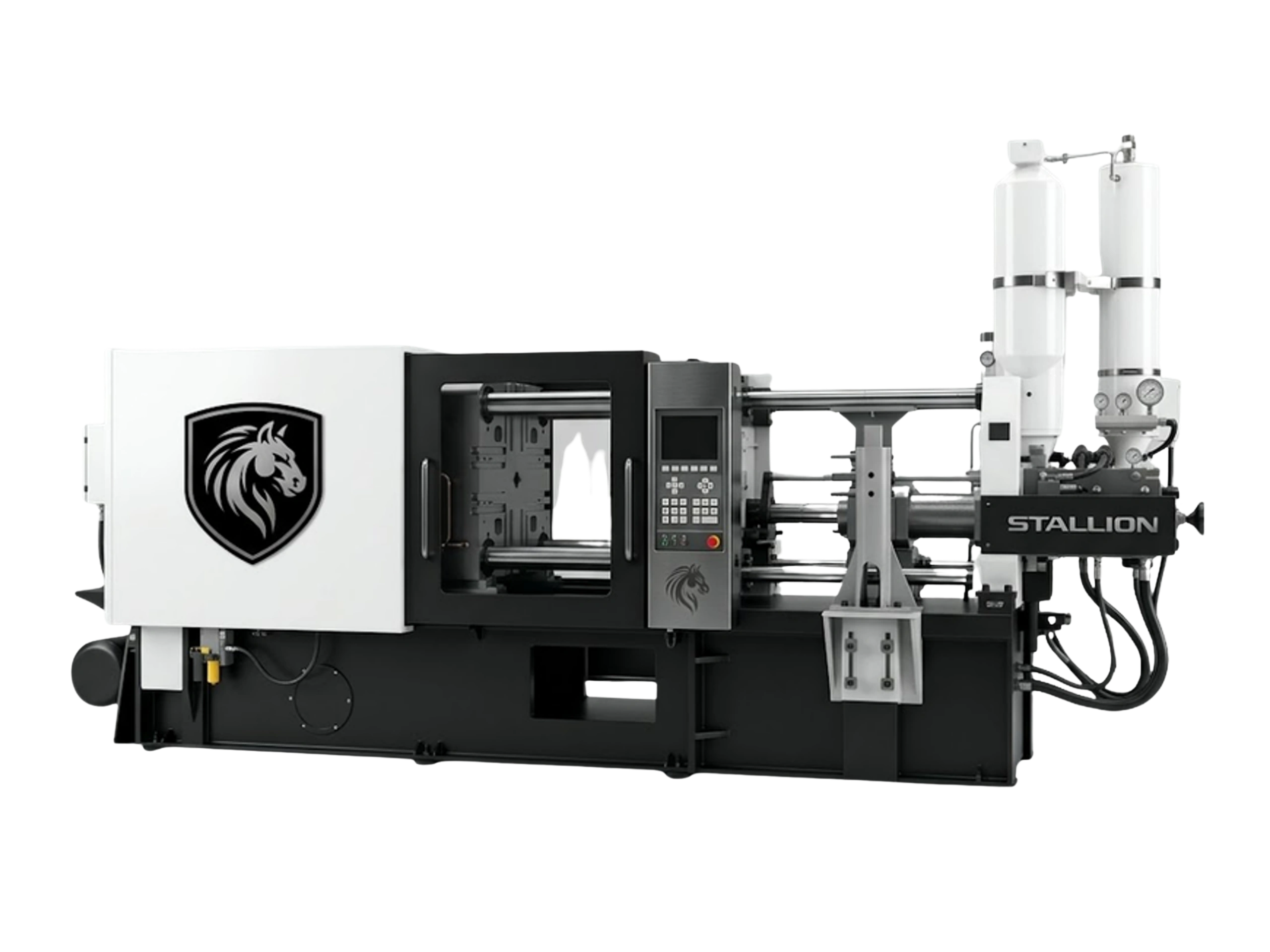
FMU1 for general aluminium parts where automated tilting reduces operator fatigue. FMU2 for static (un-tilted) gravity casting — simpler, lower capex, suited to low-volume or prototype runs. FMU/R 4-column servo rotary for complex parts where the tilt profile matters (multi-point pour, controlled fill velocity) — cylinder heads, complex impellers. FCL gantry-robot line for high-volume cylinder head production with integrated core inserting and cooling. Our engineering team scopes the platform to your part and annual volume.
Servo vs hydraulic tilting — which to choose?
Hydraulic tilting (FMU1) is simpler, lower capex, and adequate for parts with forgiving fill characteristics — typical aluminium gravity casting work. Servo tilting (FMU/R) gives programmable tilt-profile control — accuracy ±0.05°, up to 40 programmable pour points, repeatable fill velocity. Servo is preferred where mould fill behaviour materially affects scrap rate, typically on cylinder heads, complex pump bodies and thin-section castings.
How is mould temperature controlled across the casting cycle?
Standard machines use independent heating zones for cope, drag and core — typically 250 to 400°C, with internal resistance heaters or oil-based circulation. The PLC holds each zone at a set-point and modulates heating during the cool-down portion of each cycle. The optional multi-zone oil-based mould-temperature controller (up to ≤350°C) gives finer control where critical-zone temperature stability affects fatigue properties or surface finish.
Why is the Stallion Gravity Casting platform superior to competitor offerings?
The platform spans the full production matrix — hydraulic single-station to fully automated cylinder-head islands — on a unified PLC control architecture, so operators trained on one machine transfer directly to the next. Critical components — servo motors, bearings, PLC, hydraulic valves, linear guides — are built around internationally proven names in Japan, Germany and Europe (Yaskawa, NSK, OMRON, Rexroth) for sustained accuracy and long service life. Cell integration with core making, melting and downstream fettling makes Stallion a single-source engineering partner for the complete gravity-casting line.