Robotics & Automation
Complete automation engineering — from a single robotic cell to a fully unmanned production line.
Full Specifications
From A Single Cell To A Lights-Out Line · Stallion Engineers The Complete System
LED BY A ROBOTICS ENGINEERMr. Sanjay P. S.
Joint Director · Head of Automation, Stallion Machine Tools
Frequently Asked Questions
Does Stallion build automation in-house, or integrate third-party systems? +
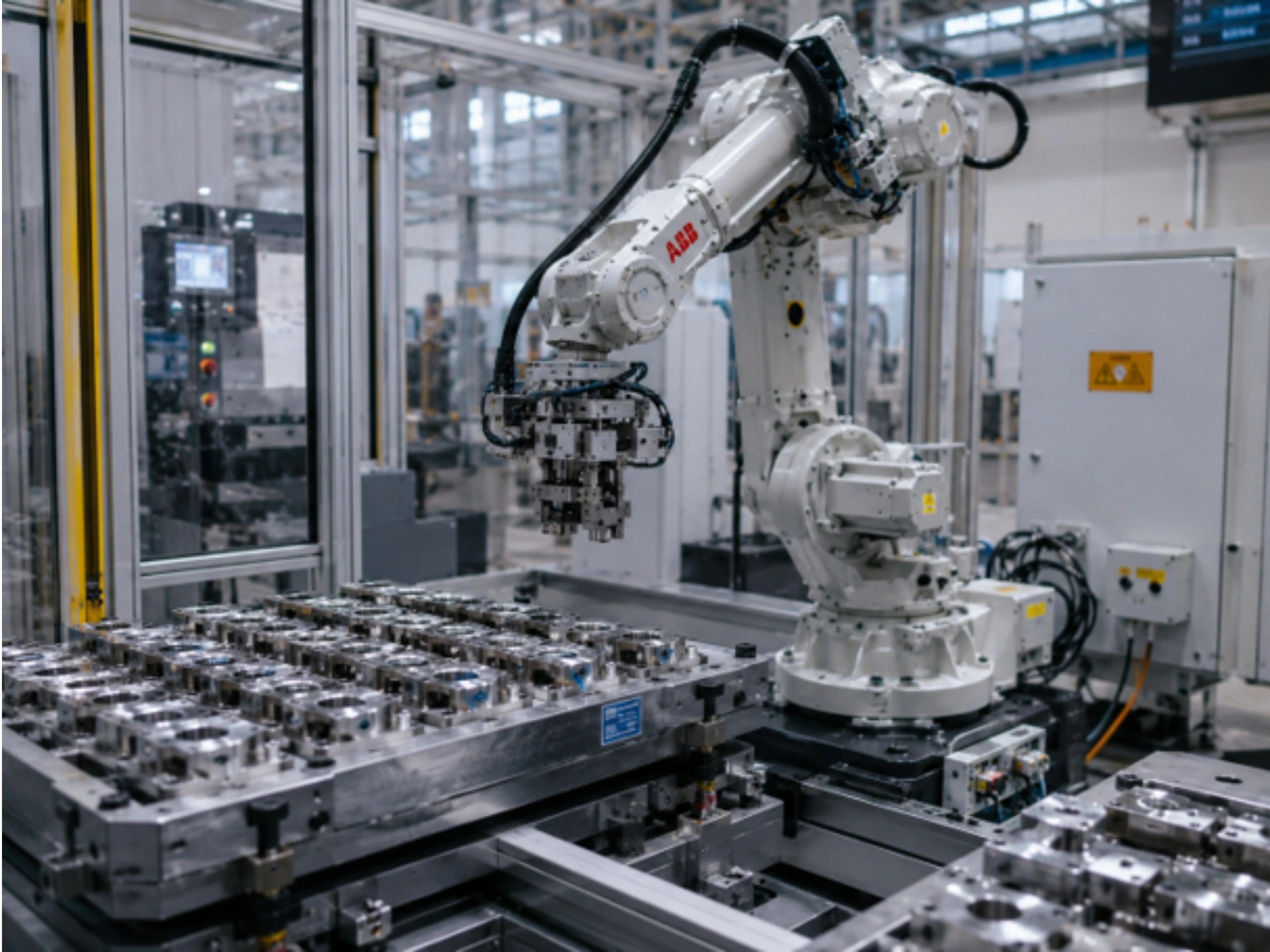
Both, depending on what the application requires. Stallion engineers the complete production system in-house — the process design, the line layout, the cycle-time engineering, the safety and the controls. The industrial robots themselves are sourced from leading global robot manufacturers, selected for the specific application. The gantry systems, end-of-arm tooling and integration engineering are designed by Stallion. The customer receives a single point of accountability for the entire line.
Can Stallion automate an existing line, or only build new ones? +
Both. Many of Stallion's automation engagements begin with re-engineering an existing customer line — consolidating operations, removing bottlenecks and introducing automation in stages. Other engagements are greenfield, where Stallion designs the production line from a blank floor plan. Brownfield automation is often the more demanding engineering challenge, and Stallion has deep experience in both.
How does Stallion's automation work tie into the rest of its product range? +
Stallion's automation portfolio integrates directly with the company's CNC machine range, foundry equipment and additive manufacturing portfolio. A single customer engagement can include CNC machines, casting equipment, an industrial 3D printer and a robotic loading cell — all engineered, supplied and supported by Stallion as one integrated system. This is the defining advantage of working with a complete engineering partner rather than separate equipment suppliers.
What is Industry 5.0, and how does it apply to Stallion's automation work? +
Industry 5.0 is a manufacturing framework introduced by the European Commission that builds on the automation focus of Industry 4.0 by adding human-centric, sustainable and resilient elements — AI on the shop floor, robotics integrated into machining lines, connected and data-aware production systems. For Stallion, Industry 5.0 is the operating principle that guides every automation engagement: designing systems that not only run themselves, but are intelligent enough to adapt, self-diagnose and continuously improve. The mandate is led by Stallion's Joint Director, who holds an MS in Robotics from the University of Sheffield.