
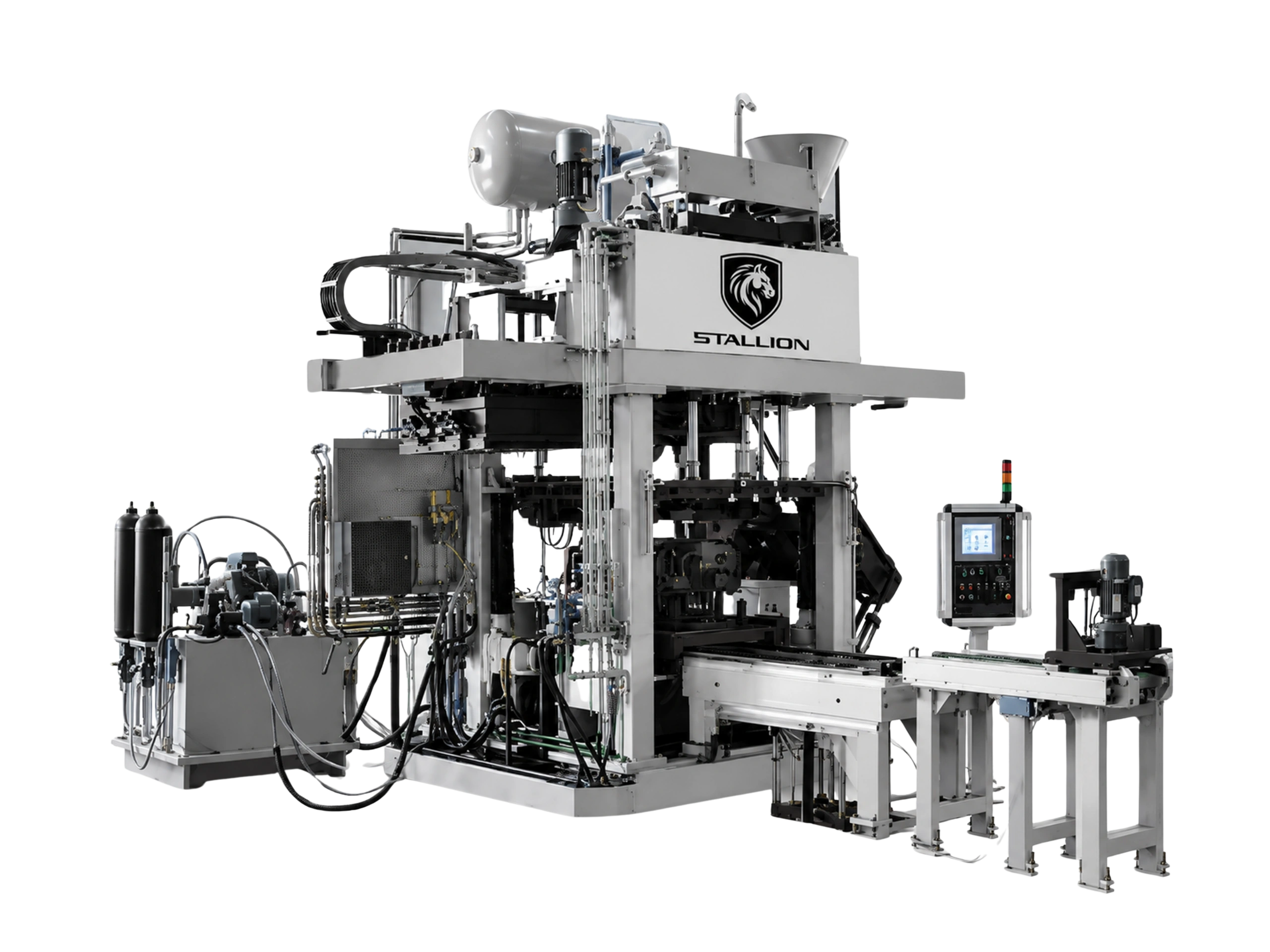
At A Glance
Operations Performed
Full Specifications
FX4 Cold-Box Core Shooter (Small-to-Medium Cores)
| Specification | FX4-2L | FX4-5L | FX4-10L | FX4-25L | FX4-25L | FX4-25L |
|---|---|---|---|---|---|---|
| Sand shot capacity (L) | 2 | 5 | 10 | 25 | 50 | 150 |
| Shot pressure (bar) | 3–6 | 3–6 | 3–6 | 3–6 | 3–6 | 3–6 |
| Mould opening daylight (mm) | 250 | 350 | 450 | 600 | 750 | 1100 |
| Clamping force (kN) | 80 | 150 | 250 | 400 | 600 | 1200 |
| Gas curing time (sec) | 5–20 | 5–20 | 5–20 | 5–30 | 5–30 | 10–60 |
| Amine recovery | Integrated | Integrated | Integrated | Integrated | Integrated | Integrated |
| PLC controller | Japan OMRON | Japan OMRON | Japan OMRON | Japan OMRON | Japan OMRON | Japan OMRON |
FX6 Cold-Box + Inorganic Core Shooter (Medium-to-Large Cores)
| Specification | FX6-20L | FX6-50L | FX6-100L | FX6-200L | FX6-400L |
|---|---|---|---|---|---|
| Sand shot capacity (L) | 20 | 50 | 100 | 200 | 400 |
| Shot pressure (bar) | 3–6 | 3–6 | 3–6 | 3–6 | 3–6 |
| Binder system | Cold-Box / Inorganic | Cold-Box / Inorganic | Cold-Box / Inorganic | Cold-Box / Inorganic | Cold-Box / Inorganic |
| Mould opening daylight (mm) | 500 | 750 | 950 | 1200 | 1500 |
| Clamping force (kN) | 350 | 600 | 1000 | 1500 | 2500 |
| Inorganic curing | Hot-air ≤180°C | Hot-air ≤180°C | Hot-air ≤180°C | Hot-air ≤180°C | Hot-air ≤180°C |
| Tool change format | Manual | Manual / Quick | Quick-change | Quick-change | Quick-change |
FM5 Continuous Sand Mixer
| Specification | FM5-25 | FM5-50 | FM5-50 | FM5-150 | FM5-200 | FM5-300 |
|---|---|---|---|---|---|---|
| Output rate (kg/min) | 25 | 50 | 100 | 150 | 200 | 300 |
| Mixing arm length (mm) | 1500 | 1800 | 2200 | 2500 | 2800 | 3200 |
| Number of arms | 1 | 1 | 2 | 2 | 2 | 2 |
| Mixer motor (kW) | 3 | 5.5 | 11 | 15 | 18.5 | 22 |
| Mixer motor (kW) | 2 | 2 | 3 | 3 | 3 | 3 |
| Catalyst pumps | 1 | 1 | 1 | 1 | 1 | 1 |
| Discharge type | Direct chute | Direct chute | Swivel chute | Swivel chute | Swivel chute | Swivel chute |
Standard Features Optional Equipment
Standard Features
- PLC control (Japan OMRON) + colour HMI touch-screen
- Gas-tight curing chamber with amine recovery scrubber (cold-box)
- Hot-air inorganic curing module (FX6 series)
- Pneumatic sand-shot system with regulated shot pressure
- Hydraulic mould clamping with daylight adjustment
- Japan-grade precision servo on shot and clamping (FX6)
- Germany-grade linear guides on tool slides
- Safety light curtain + dual-handed start interlock
- Sand-level sensor + low-binder alarm
Optional Equipment
- Robot core extraction & cooling tray (cold-box variants)
- Quick-change tool holder with on-board tool library
- In-line core coating booth (water-based / alcohol-based)
- Sand pre-heater for inorganic process consistency
- Pattern-plate heating (FX6 inorganic)
- Conveyor handoff to assembly station
- Continuous mixer dust extraction + bag-filter unit (FM5)
- Reclaimed-sand return loop with cooling tower
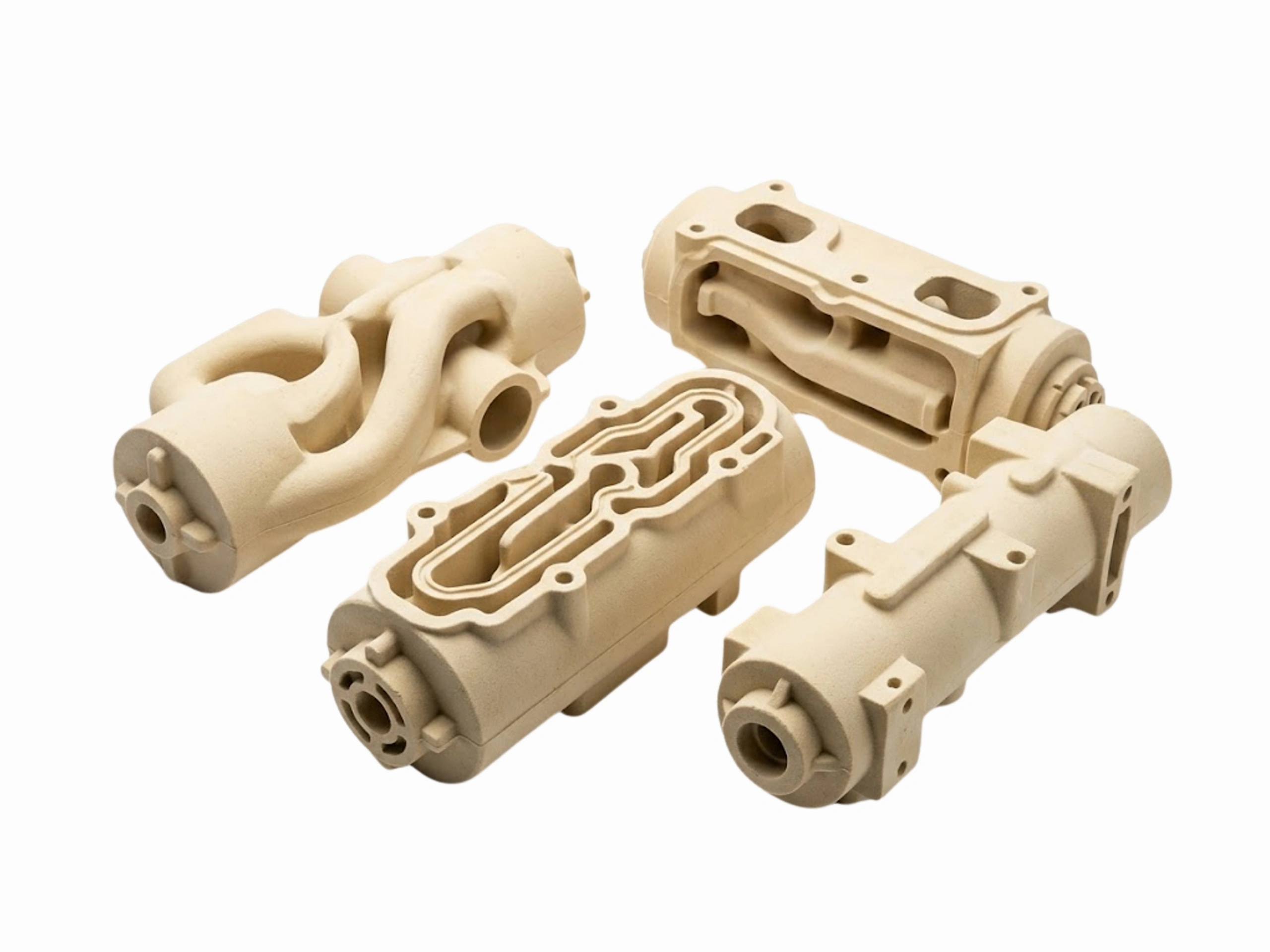
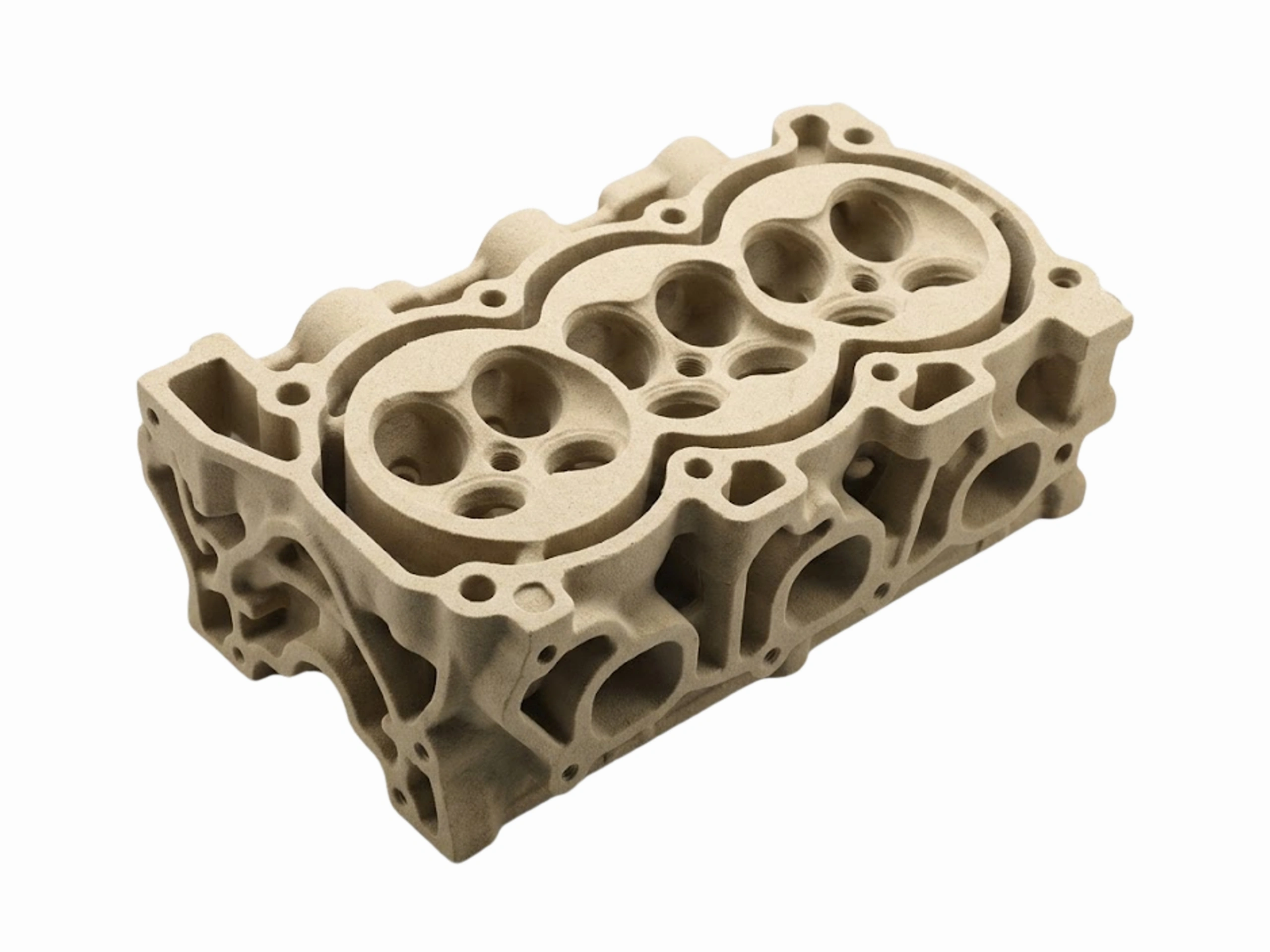
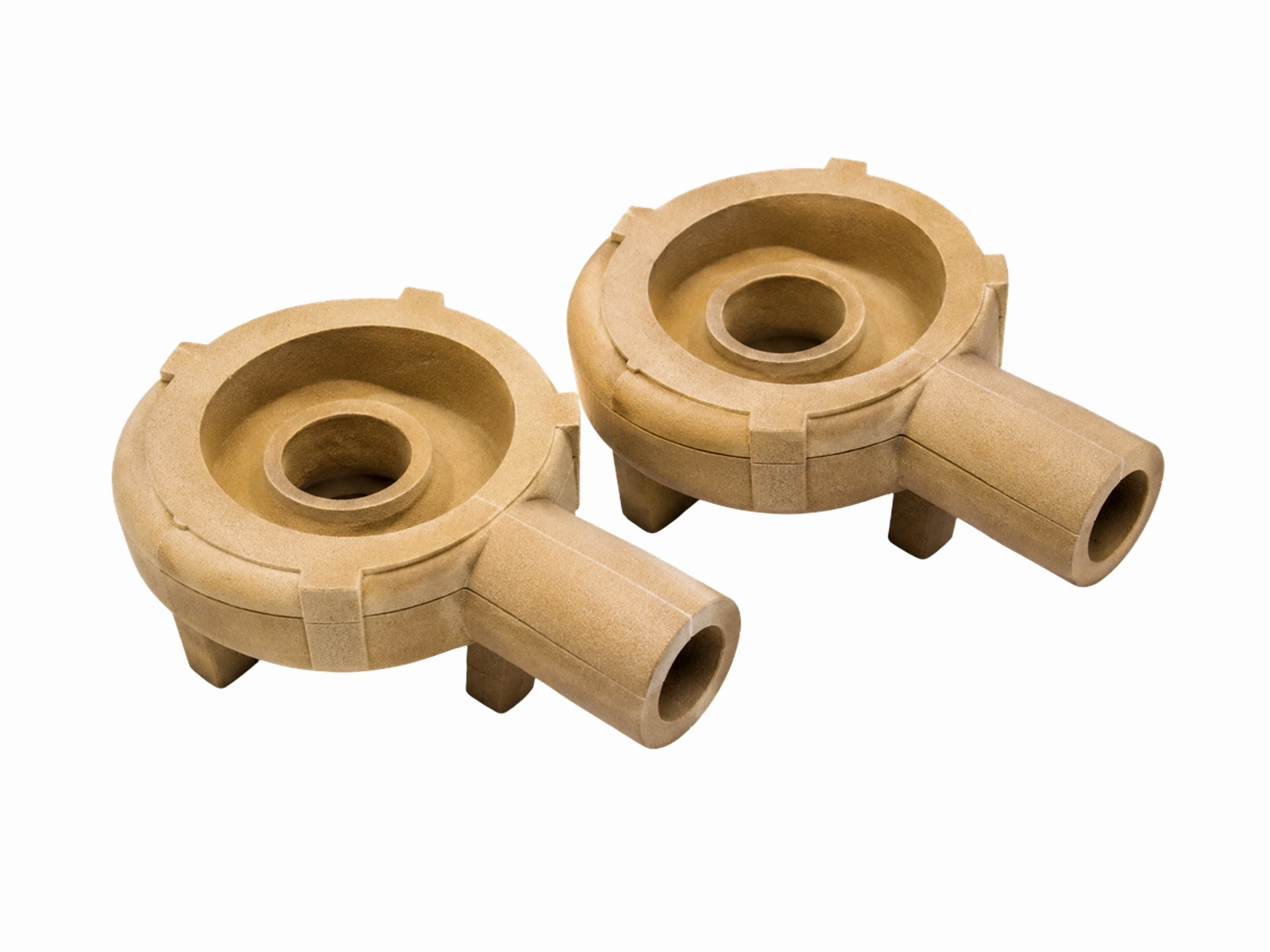
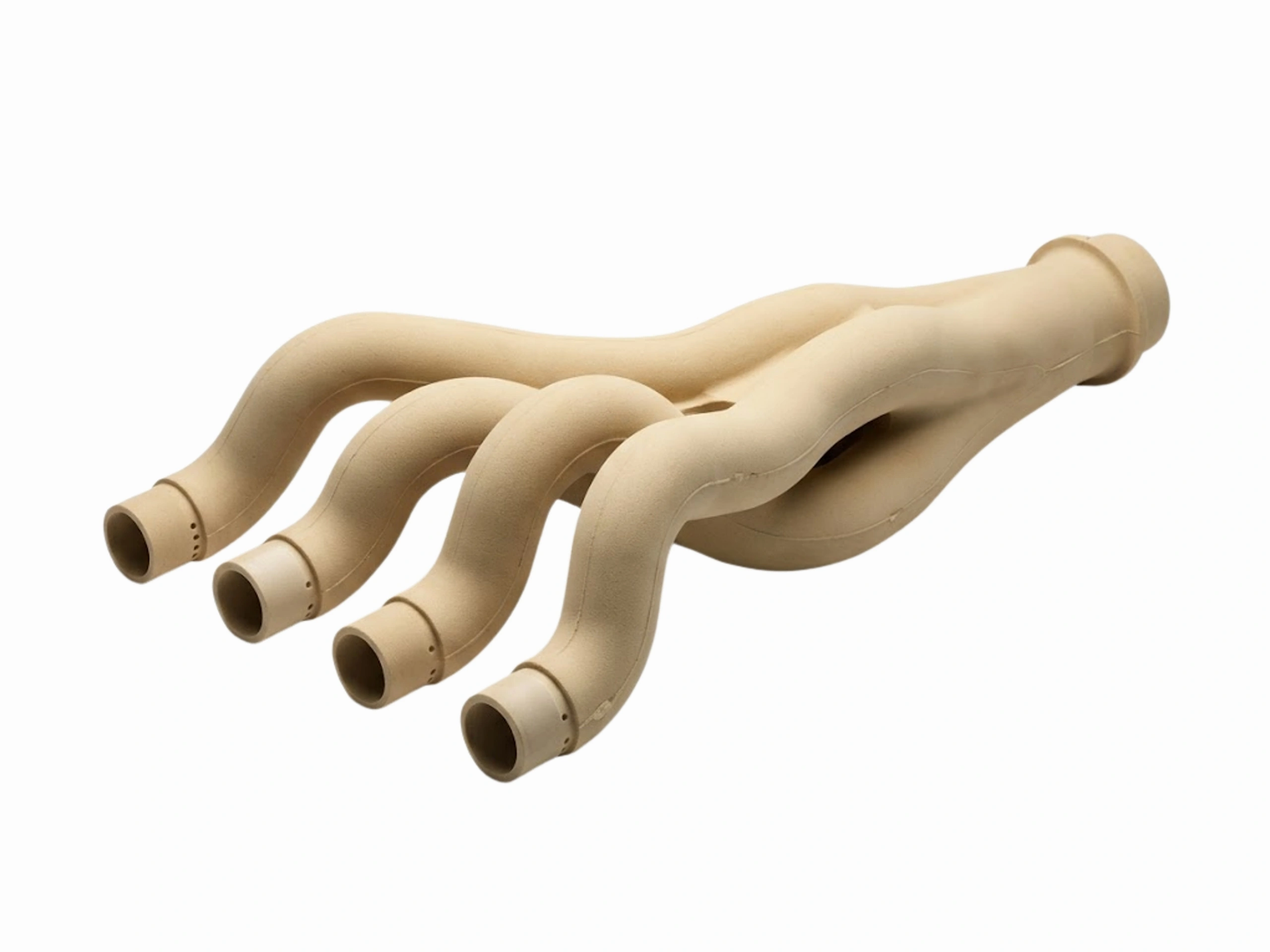
Typical Workpieces
Frequently Asked Questions
What is the difference between cold-box and inorganic core making?
Cold-box uses a chemically-cured resin binder activated by an amine gas catalyst — fast cycle, very strong cores, but produces amine emissions that require capture and scrubbing. Inorganic uses water-glass-based binders cured by hot air — environmentally cleaner, no amine emissions, lower casting smoke, but typically a slightly longer cycle. The FX6 series supports both processes on the same platform so foundries can transition gradually.
Which series matches our core volume?
FX4 for cores up to 150 litres of sand (typical small-to-medium automotive cores). FX6 for 20 to 400 litres (heavy engineering, large engine blocks, pump housings). FM5 is the sand-mixing front end — sized in kg/min to match the downstream core production rate, typically one mixer feeds 2–4 core shooters.
How is amine emission handled in the cold-box variants?
All cold-box machines include an integrated gas-tight curing chamber with sealed mould interface, post-cure purge, and an amine recovery scrubber that captures unreacted amine for safe handling. The mould is opened only after the purge cycle, so the operator workspace stays below permissible exposure limits without additional facility ventilation.
Can we change tools between part families quickly?
FX4 small models use a manual tool change. FX4 large and FX6 series offer a quick-change tool holder with on-board tool library — typical tool changeover under five minutes. For high-mix production we also offer pattern-plate heating (inorganic) and a hydraulic core-tray exchange that brings full part-changeover well under fifteen minutes.
Why is the Stallion FX series superior to competitor core shooters?
The platform uses a unified PLC controller (Japan OMRON) and internationally proven servo drive train across the entire size range — so an operator trained on the FX4-25L transfers directly to the FX6-200L without retraining. Critical components — bearings, servo motors, linear guides, hydraulic valves — are built around internationally proven names in Japan and Germany (NSK, Yaskawa, Rexroth) for sustained accuracy and long service life under continuous foundry use.